Baking and dough

Amylase in High-Hydration Pizza Dough: Dose and Crust Control

How can a baker use amylase to tune fermentation and crust without sticky dough, excess browning or weak texture?
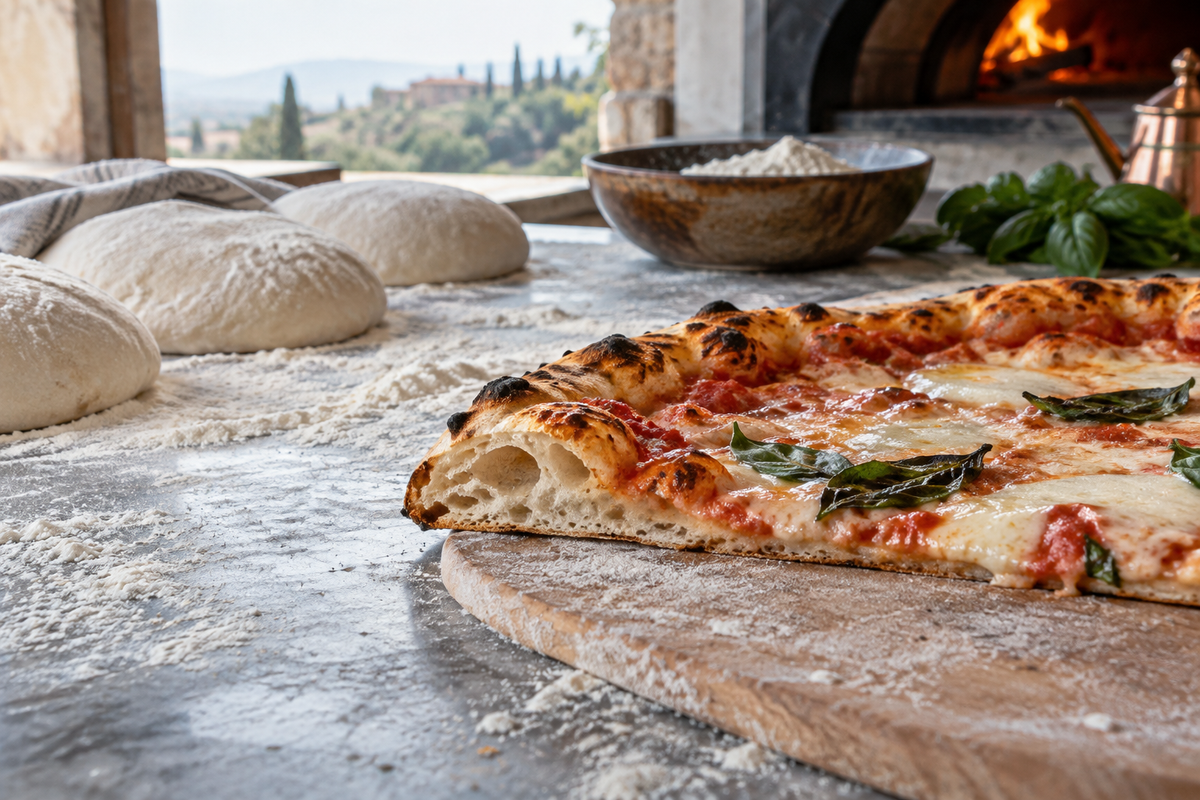
Amylase in High-Hydration Pizza Dough: Dose and Crust Control

Choose the right enzyme

FeedstockProcessing targetEnzyme to investigateWhat to measure
Pale crustTest limited fermentable-sugar changeBaker's AmylaseColour, fermentability and stickiness
Firm stored pizzaTest crumb and crust textureBaker's MaltogenaseTexture after defined storage
Long cold fermentAvoid cumulative over-conversionLow graded doses and controlHandling, colour and flavour

These choices set a trial direction; confirm suitability and use conditions for the specific supplied grade.

Plan the process

  1. 1

    Lock the recipe

    Keep flour, hydration, yeast, salt and cold fermentation constant.

  2. 2

    Dilute accurately

    Prepare a measured premix for very small enzyme additions.

  3. 3

    Run dose ladder

    Include no-enzyme control and at least two submaximal doses.

  4. 4

    Bake and store

    Measure colour, crispness, toughness and texture at defined times.

Pizza dough with long cold fermentation may respond strongly to small amylase changes. Measure the baked crust and stored texture, not only dough rise.

Define the actual pizza target

An eggshell-crisp, thin crust and a softer stored crumb are distinct targets. Alpha-amylase changes available starch fragments and sugars, affecting fermentation and browning. Maltogenic amylase can influence starch retrogradation; the two products should be screened independently first.

A high-hydration dough can become sticky when starch breakdown exceeds the flour and process tolerance. Evaluate handling at opening and bake, not just fermentation volume.

Use a reproducible microdose

When the intended addition is below the reliable mass range of a small scale, make a documented flour or water premix and include the diluent in every control. State dose as mass of formulated enzyme per flour mass, not an ambiguous percentage of the dough.

Hold the cold fermentation duration and temperature fixed across samples. A change in bake temperature or dough maturity can overwhelm a small enzyme effect.

Evaluate baked and stored pizza

Record dough extensibility, oven spring, top and underside colour, crust crispness immediately after bake and toughness after the intended storage. Use blind sensory checks if flavour matters.

Choose the lowest dose that meets the target consistently. A darker crust alone does not establish improved eating quality or reduced staling.

Turn a microdose into a repeatable experiment

At very low additions, weigh a larger amount of enzyme into a measured flour or water premix, mix thoroughly, and dose by mass. Prepare a carrier-only control. Log the dilution and express the final dose per kilogram of flour so that a successful trial can be repeated in production.

Test alpha-amylase and maltogenic amylase separately first. A simple two-by-two combination is useful only after the individual effect on dough handling, browning and stored texture is known.

Judge the pizza at the table

Record crust crispness shortly after baking and toughness after the intended hold or reheat. Standardise the oven surface, bake time, ball temperature and dough age; these can obscure subtle enzyme effects in a long cold-fermented dough.

Troubleshooting

If the dough becomes sticky, reduce dose and check flour activity and fermentation length. If colour improves but crust softens, separate amylase and maltogenic trials. If replicated pizzas disagree, standardise opening, bake position and endpoint temperature.

Common questions

Can I add both amylases at once?

Screen each first, then test a small factorial combination if the individual effects justify it.

How should I weigh tiny doses?

Use a measured premix and account for the carrier and dilution in every formulation.

Evidence and scope

These are proposed development comparisons, not validated operating recipes or guaranteed outcomes. Confirm the current technical and safety data for the exact grade, and assess the finished product against relevant requirements.

Recommended products

Choose the products that match your process. Each card explains its role in this application; you do not need every enzyme in one recipe.

Benefits are application targets; confirm dosage and performance in your finished formulation.

References and supporting evidence

Research and manufacturer examples support the application rationale; they do not establish identical performance for every commercial preparation.

  1. IUBMB — Alpha-amylase, EC 3.2.1.1

    Catalytic classification for a representative activity; confirm the supplied preparation's actual activity profile.

  2. IUBMB — Maltogenic alpha-amylase, EC 3.2.1.133

    Catalytic classification for a representative activity; confirm the supplied preparation's actual activity profile.

  3. Scientific & Technical — bakers-amylase-enzyme

    Product information; confirm current technical and lot documentation.

  4. Scientific & Technical — bakers-maltogenase-enzyme

    Product information; confirm current technical and lot documentation.