Food and beverages

Invertase for Invert Sugar: Process Selection and Measurement

Use invertase to hydrolyse sucrose into glucose and fructose. Plan trials around syrup concentration, residual sucrose and the required endpoint.
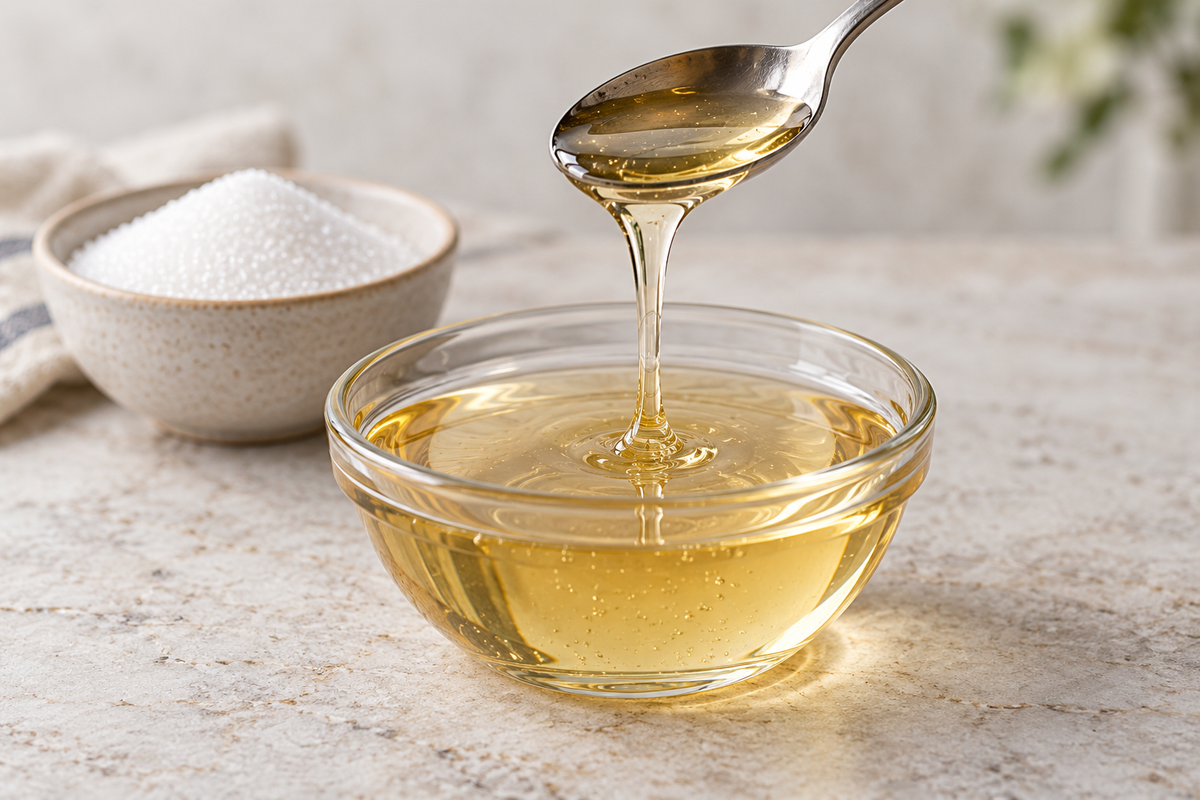
Invertase for Invert Sugar: Process Selection and Measurement

Choose the right enzyme

FeedstockProcessing targetEnzyme to investigateWhat to measure
Sucrose syrupProduce glucose and fructoseInvertaseResidual sucrose and sugar profile
Concentrated syrupEstablish process performanceInvertase at supported conditionsConversion and mixing
Partially inverted syrupRetain a specified compositionControlled invertase treatmentSugar profile after finishing

Plan the process

  1. 1

    Prepare the syrup

    Prepare a homogeneous syrup at the intended concentration and measure the starting sugar profile.

  2. 2

    Screen additions

    Compare a control and supported invertase additions under compatible conditions.

  3. 3

    Sample and analyse

    Collect timed samples and stop activity consistently before analysis.

  4. 4

    Verify finished composition

    Select the treatment meeting composition and processing targets, then verify storage behaviour after the finishing step.

Invertase hydrolyses sucrose into glucose and fructose. Select treatment conditions around the required residual sucrose and finished syrup properties, rather than assuming that a sweeter taste proves complete conversion.

Define the sugar specification

Decide whether the goal is partial or extensive sucrose conversion. Record the starting syrup composition, solids and any existing glucose or fructose. A target defined only as “invert sugar” can hide different acceptable compositions and therefore different processing requirements.

Understand the reaction

Sucrose hydrolysis consumes water and produces one glucose and one fructose molecule per sucrose molecule cleaved. Invertase is not a starch-liquefaction enzyme. If the starting feedstock is starch, use an appropriate starch-conversion route rather than assuming invertase will perform the same job.

Test the actual syrup concentration

A result in a dilute sucrose solution does not establish performance in a concentrated syrup. Mixing, sampling and enzyme behaviour can change with the matrix. Use the intended solids level and record the complete temperature history, including any warm preparation stage before enzyme addition.

Measure residual sucrose directly

A refractometer can track soluble solids but does not distinguish sucrose from the glucose and fructose produced. Use suitable chromatography or validated specific methods to establish composition. Assess the finished syrup after the intended downstream process and confirm that residual enzyme activity will not shift the specification later.

Frequently asked questions

Can I use invertase on starch?

It is selected for suitable fructofuranosides such as sucrose, not for starch liquefaction.

Does a constant Brix reading mean no reaction occurred?

No. Sugar composition can change substantially without a corresponding diagnostic change in the soluble-solids reading.

Troubleshooting

  • Brix stays similar while sweetness changes: determine individual sugars before interpreting conversion.
  • The syrup changes during storage: validate the stopping step and final sugar specification.

Evidence and scope

These are proposed development comparisons, not validated production recipes or guaranteed performance results. Use current grade-specific technical data for the starting dose and operating conditions. Record the enzyme lot and assay definition, and confirm performance in the finished process before scale-up.

Alpha-Amylase vs Beta-Amylase vs Glucoamylase: Which Do I Need?

How Much Enzyme Do I Need? Dose Calculations Explained

Process development and supply

Share your feedstock, batch size, temperature and pH profile, treatment time and target specification with Scientific & Technical. Select a relevant product below to see current pack sizes, price and availability, and buy online. For blends and kits, confirm the component selection and conditions against your intended application.

Follow each preparation’s technical and safety data sheets, including storage and handling instructions. Avoid generating enzyme dust or aerosols.

Recommended products

Choose the products that match your process. Each card explains its role in this application; you do not need every enzyme in one recipe.

Invertase
Sucrose conversion

Invertase

Develop the required invert-sugar profile

  • Treat syrup at its intended solids loading
  • Measure sucrose, glucose and fructose after finishing

Benefits are application targets; confirm dosage and performance in your finished formulation.

References and supporting evidence

Research and manufacturer examples support the application rationale; they do not establish identical performance for every commercial preparation.

  1. IUBMB enzyme nomenclature: EC 3.2.1.26

    Reaction classification supporting the mechanism discussed; not validation of commercial trial settings.

  2. Scientific & Technical — Invertase

    Current product information; confirm the technical sheet and lot specification for the supplied preparation.