Fermentation and flavour development

Koji Rice vs Liquid Koji Enzymes: Choosing and Testing a Format

Compare koji rice and liquid koji enzymes for flavour and texture development. Control salt, moisture, enzyme exposure and the finished process.
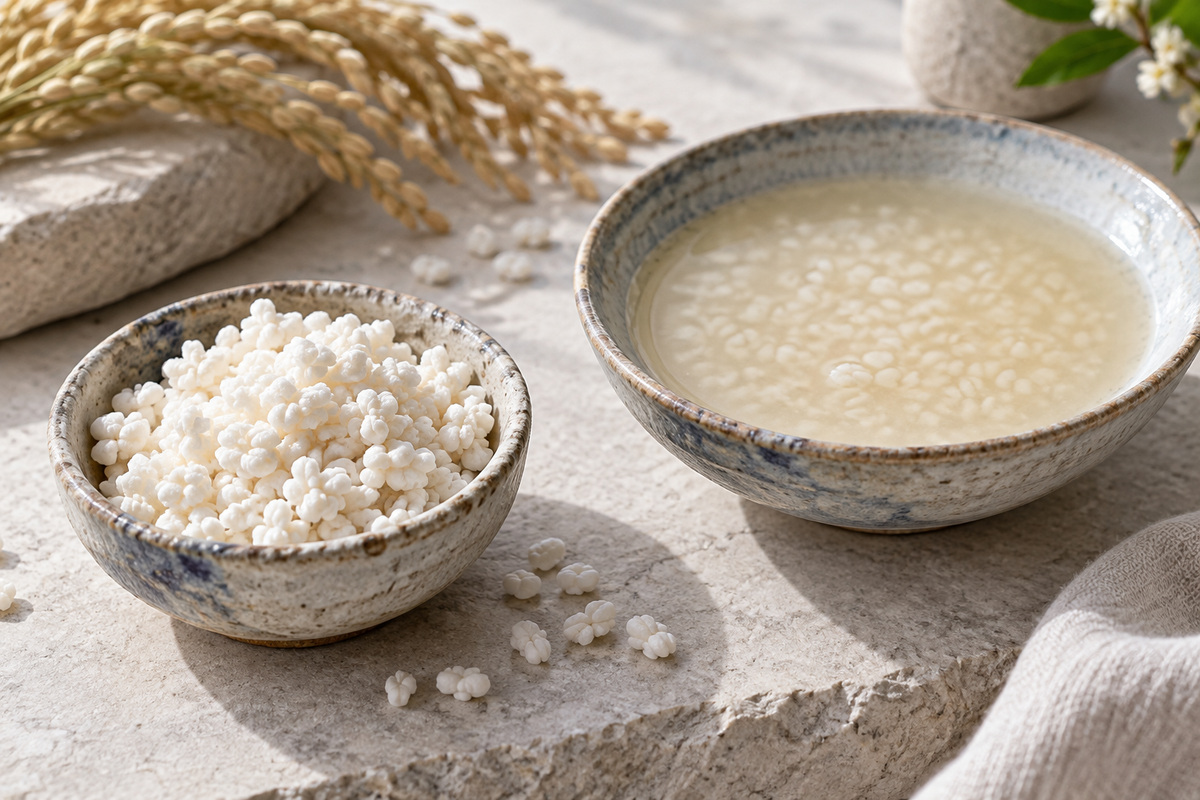
Koji Rice vs Liquid Koji Enzymes: Choosing and Testing a Format

Choose the right enzyme

FeedstockProcessing targetEnzyme to investigateWhat to measure
Rice-compatible recipeUse a solid enzyme sourceKoji RiceTexture and flavour development
Liquid addition processDistribute an extractKoji Enzymes (liquid)Salt, moisture and treatment response
Sensitive texture targetAvoid over-treatmentTimed endpoint comparisonTexture after finishing

These comparisons identify useful development endpoints; they are not universal dose or operating-condition recommendations.

Plan the process

  1. 1

    Balance the recipe

    Define the target flavour or texture and select the format best suited to the recipe.

  2. 2

    Compare formats

    Prepare matched batches with controlled salt, water and ingredient amounts.

  3. 3

    Track treatment

    Compare treatment time using consistent texture and composition measurements.

  4. 4

    Assess the finish

    Apply the intended finishing process and assess the final product, including any continued activity during storage.

Koji rice and liquid koji preparations offer different ways to introduce a complex enzyme system. Choose the format by the desired flavour and texture change, the ingredients it contributes and the practical handling of the process.

Understand the source of the activities

Koji is associated with the mould Aspergillus oryzae, not a yeast. The preparation can supply carbohydrate- and protein-modifying activities, but their balance depends on the product and production history. Do not treat dried koji rice as equivalent to a purified enzyme or assume every preparation has the same amylase-to-protease ratio.

Account for everything the format adds

Koji rice contributes rice solids and absorbs or redistributes water. The liquid product is a salt-containing extract, so it changes salt and liquid addition as well as enzyme exposure. Use a salt- and moisture-matched control where possible. Comparing equal spoonfuls without correcting these differences cannot isolate the effect of the enzymes.

Choose a controlled flavour endpoint

Record treatment time, temperature, texture, soluble solids and a suitable protein-hydrolysis measurement if relevant. In food development, assess flavour only within an appropriate validated food-handling process. More hydrolysis can produce unwanted softness or bitterness. Establish the stopping, cooking or finishing step and confirm the final ingredient balance rather than relying on a fixed time borrowed from another recipe.

Troubleshooting

  • Liquid koji seems stronger: check the salt, water and activity basis before drawing a conclusion.
  • Texture continues changing: verify the finishing step and residual enzyme activity.

Common questions

Are koji rice and liquid koji interchangeable by weight?

No. Solids, water, salt and activity can differ.

Does more treatment always improve flavour?

No. Excessive breakdown can harm texture or produce an undesirable flavour profile.

Evidence and scope

These are proposed development comparisons, not validated production recipes or guaranteed performance results. Use current grade-specific technical data for the starting dose and operating conditions. Record the enzyme lot and assay definition, and confirm performance in the finished process before scale-up.

Papain for Protein Hydrolysis: Tenderisation and Endpoint Control

Amylase, Xylanase and Cellulase in Baking: Different Jobs in Dough

How to Design an Enzyme Screening Trial That Gives Useful Results

Process development and supply

Share your feedstock, batch size, temperature and pH profile, treatment time and target specification with Scientific & Technical. Select a relevant product below to see current pack sizes, price and availability, and buy online. For blends and kits, confirm the component selection and conditions against your intended application.

Follow each preparation’s technical and safety data sheets, including storage and handling instructions. Avoid generating enzyme dust or aerosols.

Recommended products

Choose the products that match your process. Each card explains its role in this application; you do not need every enzyme in one recipe.

Koji Rice
Solid koji addition

Koji Rice

Explore a rice-based enzyme source

  • Include the rice carrier in the recipe balance
  • Assess flavour and texture after finishing

Benefits are application targets; confirm dosage and performance in your finished formulation.

References and supporting evidence

Research and manufacturer examples support the application rationale; they do not establish identical performance for every commercial preparation.

  1. Scientific & Technical — Koji Rice

    Current product information; confirm the technical sheet, intended-use documentation and lot specification for the supplied preparation.

  2. Scientific & Technical — Koji Enzymes (liquid)

    Current product information; confirm the technical sheet, intended-use documentation and lot specification for the supplied preparation.