Dairy and food processing

Lactase for Lactose-Reduced Milk: Process and Verification

How should a dairy developer trial lactase and verify the finished milk reaches its intended lactose target?
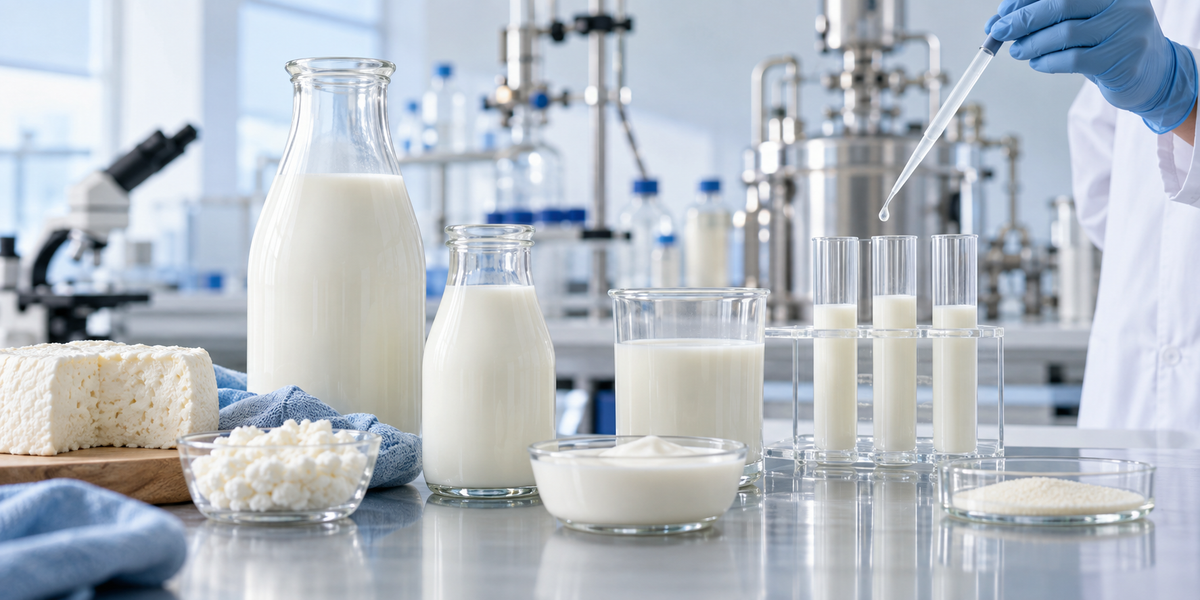
Lactase for Lactose-Reduced Milk: Process and Verification

Choose the right enzyme

FeedstockProcessing targetEnzyme to investigateWhat to measure
Cold milk holdAssess low-temperature treatmentSuitable Lactase gradeResidual lactose versus time
Warm batch stageAssess treatment before finishingGrade-confirmed LactaseResidual lactose and sensory quality
Dry ingredient workflowAssess practical powder dosingLactase powder if suitableDispersion and finished lactose

Confirm suitability and use conditions for the exact supplied grade; these are trial directions.

Plan the process

  1. 1

    Define claim

    Set the applicable final lactose specification and test method.

  2. 2

    Plan addition

    Record milk composition, temperature, hold time and grade.

  3. 3

    Sample through time

    Compare no-enzyme control and dose-response batches.

  4. 4

    Verify finished milk

    Test after downstream processing and intended storage.

Lactase hydrolyses lactose to glucose and galactose. Select a food-suitable grade for the process and measure residual lactose in the finished milk.

Design around the actual milk

Lactase activity depends on the supplied grade and its temperature and pH profile. Milk composition, contact time and process handling affect conversion. Confirm that the particular preparation is appropriate for the intended food use.

Compare matched milk batches with no enzyme and grade-supported doses. Record lot, addition method, mixing, temperature and the full hold-time profile.

Use a selective lactose method

Hydrolysis forms glucose and galactose; a rise in glucose suggests reaction but does not quantify the lactose left with sufficient certainty for a label claim. Use a validated method appropriate to the intended threshold and matrix.

Sample during treatment and after every subsequent heating or storage step that could affect the measured result. Use appropriate blanks and calibration at low lactose concentrations.

Include product quality

Lactose hydrolysis can alter perceived sweetness and, in some processes, browning behaviour. Compare taste, colour, microbial quality and shelf life of the finished product under the normal process controls.

Choose a dosing route that reliably reaches the specification across lots, not merely in one successful laboratory vessel. Check current local labelling requirements before making a lactose-free or reduced-lactose claim.

Design for the hardest process condition

Evaluate the lowest expected treatment temperature, shortest residence time and most challenging milk composition, not only the nominal batch. Mix enzyme thoroughly and sample from multiple positions if the vessel may be stratified.

Use the applicable regulatory threshold to define the target concentration and verify that the residual lactose assay has adequate sensitivity and recovery at that level. A glucose increase cannot replace a direct lactose measurement.

Verify the sold product

Measure lactose after processing and through the intended shelf life; compare sweetness, browning and microbial quality with an untreated reference. Document lot-to-lot variation before making a labelling claim.

Troubleshooting

If conversion is low, check enzyme mixing, actual temperature and time, and assay interference. If results differ after heat treatment, sample immediately before and after the stage. If sweetness changes are undesirable, compare treatment endpoint and grade.

Common questions

Is glucose measurement enough to support a lactose claim?

No. Quantify residual lactose by a suitable validated method.

Does liquid or powder lactase determine the mechanism?

No. Format changes handling; verify the activity and food suitability of the supplied grade.

Evidence and scope

This is a proposed development comparison, not a validated production recipe or guaranteed performance claim. Use current grade-specific technical and safety data, and verify the finished product against applicable requirements.

Recommended products

Choose the products that match your process. Each card explains its role in this application; you do not need every enzyme in one recipe.

Lactase
Liquid lactase

Lactase

Meter into a milk process

  • Match treatment temperature and time
  • Measure residual lactose directly

Benefits are application targets; confirm dosage and performance in your finished formulation.

References and supporting evidence

Research and manufacturer examples support the application rationale; they do not establish identical performance for every commercial preparation.

  1. IUBMB — Beta-galactosidase, EC 3.2.1.23

    Catalytic classification for a representative activity; confirm the supplied preparation's actual activity profile.

  2. Scientific & Technical — lactase-enzyme

    Confirm the current technical sheet and lot documentation.

  3. Scientific & Technical — lactase-powder-enzyme

    Confirm the current technical sheet and lot documentation.