Fruit and beverage processing

Pectinase for Fruit Juice: Yield, Clarity and Cloud Control

Which pectinase trial improves pressing or filtration, and when could it remove desirable fruit juice cloud?
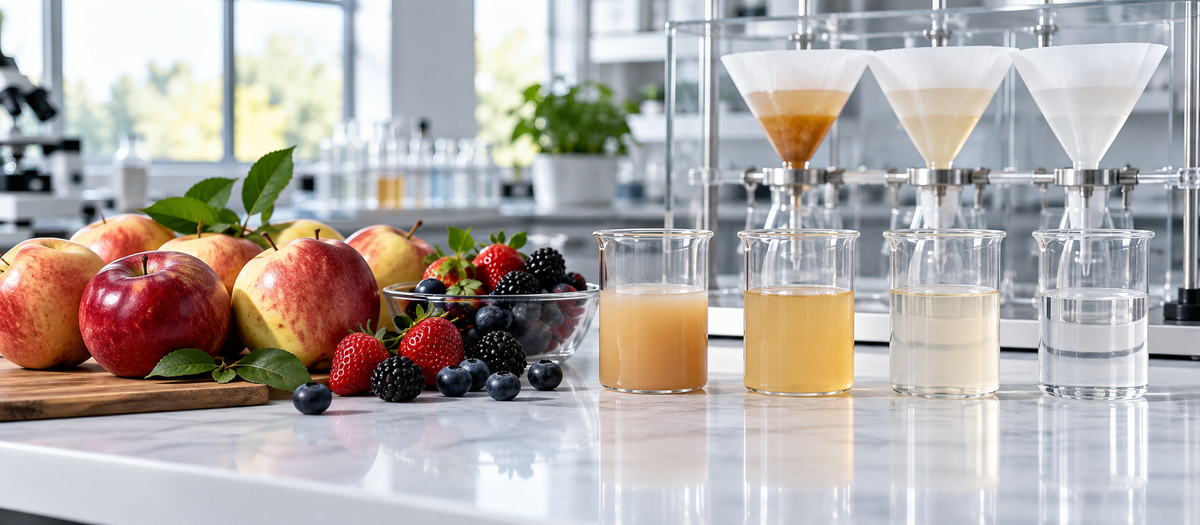
Pectinase for Fruit Juice: Yield, Clarity and Cloud Control

Choose the right enzyme

FeedstockProcessing targetEnzyme to investigateWhat to measure
Apple pressingImprove extractabilityPectinaseJuice yield and press time
Clear juiceReduce pectin haze and filtration resistancePectinaseTurbidity, filtration and flavour
Cloudy juicePreserve desired suspensionConservative pectinase screenCloud stability and mouthfeel

Confirm suitability and use conditions for the exact supplied grade; these are trial directions.

Plan the process

  1. 1

    Characterise fruit

    Record variety, ripeness, pH and pulp preparation.

  2. 2

    Run matched batches

    Use untreated and grade-supported enzyme doses.

  3. 3

    Measure process

    Track press yield, viscosity and filtration time.

  4. 4

    Assess juice

    Measure clarity or cloud stability, colour and flavour.

Pectinase can change fruit tissue breakdown and juice viscosity. Choose a target such as pressing yield or clarity before deciding how far to treat.

Choose the finished juice style first

The best treatment for a clear juice may damage the appearance of a cloudy juice. Pectin contributes to viscosity and stabilisation, while pectinase preparations can contain multiple activities. Confirm the actual grade's profile.

Use one fruit lot and a consistent crushing, temperature and pressing programme. A change in ripeness can outweigh an apparent enzyme effect.

Separate extraction and clarification

Trial pectinase before pressing when extraction is the target; evaluate a later treatment when clarification is the target. Record the enzyme addition, contact time and termination point.

Compare an untreated control and at least two sensible doses. If adding cellulase for tissue release, include a pectinase-only control to attribute the incremental effect.

Measure a useful endpoint

Calculate recovered juice mass per mass of fruit, filtration throughput and turbidity. Include colour, aroma, sediment and sensory quality through the intended storage period.

A visually clear sample may have lower saleable yield or undesirable flavour. Choose the process that meets the finished product specification at acceptable treatment cost.

Start with the juice specification

Clarified juice and stable cloudy juice ask different things of pectinase. Set measurable targets for press yield, turbidity or cloud stability and flavour before dosing. Use fruit from one lot and record ripeness, because natural pectin and tissue condition vary.

For extraction, add enzyme before pressing and weigh the recovered juice against the initial fruit mass. For clarification, treat matched expressed juice and compare filtration throughput and turbidity. These are different experiments and should not be merged into one headline yield.

Watch the final shelf life

Repeat clarity or cloud measurements after the intended storage and packaging conditions. A quick bench reading can miss later sediment, colour change or flavour loss.

Troubleshooting

If pressing yield does not increase, inspect tissue preparation and whether pectin limits drainage. If cloudy juice separates, reduce treatment and assess storage stability. If filtration improves but flavour changes, shorten contact or adjust the finishing step.

Common questions

Should all fruit juice be fully depectinised?

No. Cloudy products may depend on retained pectin or suspended solids.

Is cellulase always useful with pectinase?

Only a controlled comparison on the actual fruit can justify the extra activity.

Evidence and scope

This is a proposed development comparison, not a validated production recipe or guaranteed performance claim. Use current grade-specific technical and safety data, and verify the finished product against applicable requirements.

Recommended products

Choose the products that match your process. Each card explains its role in this application; you do not need every enzyme in one recipe.

Pectinase
Primary juice enzyme

Pectinase

Screen pectin breakdown

  • Choose pressing or clarification stage
  • Measure yield and clarity or cloud
Cellulase
Cell-wall activity

Cellulase

Compare cellulose modification

  • Check substrate accessibility
  • Measure incremental yield or sugars

Benefits are application targets; confirm dosage and performance in your finished formulation.

References and supporting evidence

Research and manufacturer examples support the application rationale; they do not establish identical performance for every commercial preparation.

  1. IUBMB — Endo-polygalacturonase, EC 3.2.1.15

    Catalytic classification for a representative activity; confirm the supplied preparation's actual activity profile.

  2. Scientific & Technical — pectinase-enzyme

    Confirm the current technical sheet and lot documentation.

  3. Scientific & Technical — cellulase-enzyme

    Confirm the current technical sheet and lot documentation.