Starch and fermentation

Xylanase for Cereal Mash Filtration: When Is It Useful?

Evaluate xylanase for cereal mash viscosity and filtration. Separate arabinoxylan effects from starch, beta-glucan and mechanical limitations.
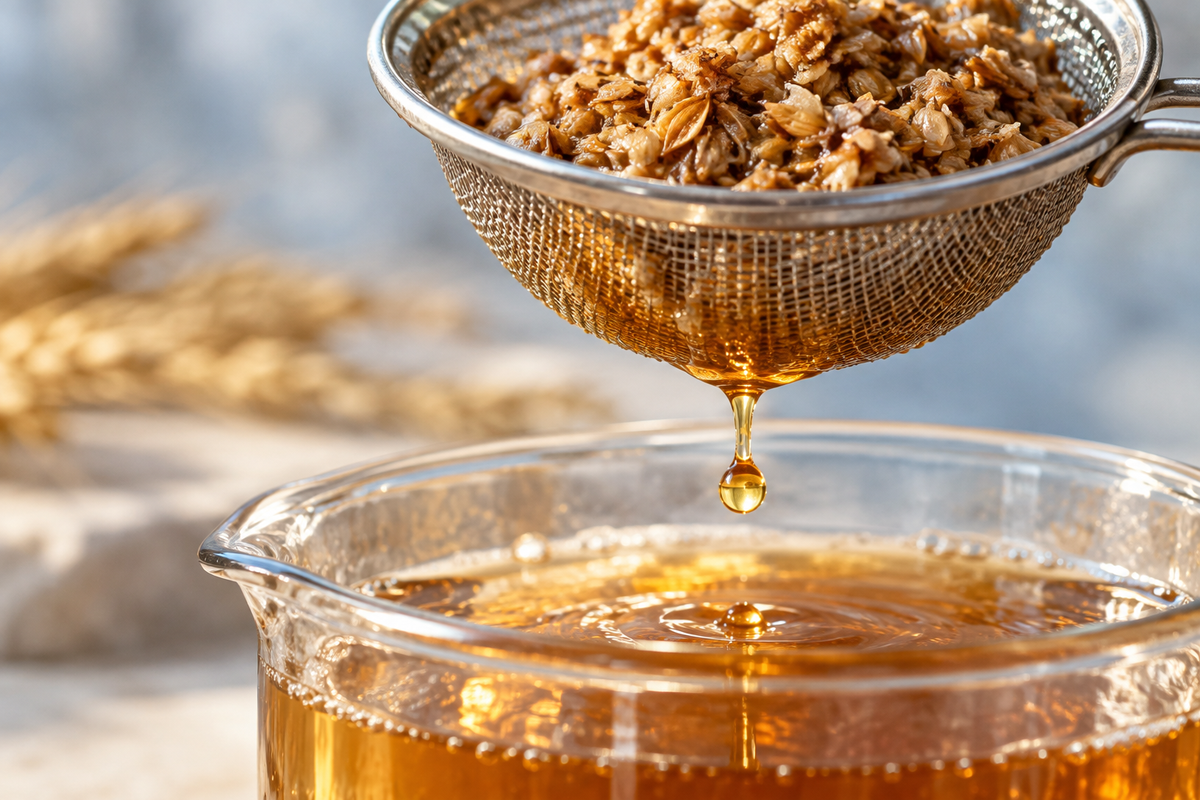
Xylanase for Cereal Mash Filtration: When Is It Useful?

Choose the right enzyme

FeedstockProcessing targetEnzyme to investigateWhat to measure
Xylan-containing cereal mashReduce polymer-related resistanceXylanaseViscosity and filtration time
Mixed mash limitationsEvaluate a broader preparationBrewer's MateThroughput and recovered solids
Mash with residual starchImprove starch conversionBrewer's AmylaseResidual starch and downstream performance

Plan the process

  1. 1

    Prepare matched mashes

    Prepare matched mashes with the same grain lot, milling and water-to-grain ratio.

  2. 2

    Choose an addition stage

    Compare no xylanase against suitable supplier-supported doses at a compatible addition stage.

  3. 3

    Measure runoff

    Measure viscosity, filtration time and recovered soluble material with the same equipment settings.

  4. 4

    Check downstream performance

    Confirm the result through the subsequent fermentation or formulation and calculate any throughput benefit.

Xylanase is worth evaluating when xylan or arabinoxylan contributes to cereal-mash handling or filtration problems. It should not be assumed to solve every slow runoff: starch, other polymers, milling and bed structure can also control the result.

Match the enzyme to the polymer

Endo-xylanase cleaves the xylan backbone. It has a different target from amylase and from enzymes selected for beta-glucan hydrolysis. Identify the relevant cereal fractions and process symptoms before choosing a treatment. A mixed-grain recipe may need a different approach from a single-cereal trial.

Separate viscosity from filtration

A lower measured viscosity does not necessarily guarantee faster filtration through a real mash bed. Particle distribution, compaction and filter conditions still matter. Measure both liquid properties and throughput under a defined filtration method.

Select an addition stage that preserves activity

Measure the temperature and pH at addition and during the proposed hold. If the mash profile quickly enters conditions that inactivate the selected grade, an earlier or separate stage may be needed. Confirm this with current product data and a practical process comparison.

Check the downstream product

Changes in extraction can affect the composition entering fermentation or formulation. Compare the resulting liquor and the finished process outcome, not only filtration speed. Keep grain lot, milling and solids fixed so the enzyme contribution can be interpreted.

Frequently asked questions

Is xylanase the same as beta-glucanase?

No. The target polymers differ, and product blends should be assessed using their stated activities.

Will xylanase always increase yield?

That is a trial outcome, not a universal property. Measure recovered material at matched process conditions.

Troubleshooting

  • Viscosity improves without faster runoff: inspect bed compaction, milling and filter conditions.
  • Results vary by grain lot: document composition and repeat the control before changing the enzyme level.

Evidence and scope

These are proposed development comparisons, not validated production recipes or guaranteed performance results. Use current grade-specific technical data for the starting dose and operating conditions. Record the enzyme lot and assay definition, and confirm performance in the finished process before scale-up.

Alpha-Amylase vs Beta-Amylase vs Glucoamylase: Which Do I Need?

Medium- vs High-Temperature Alpha-Amylase: Choosing a Grade

Process development and supply

Share your feedstock, batch size, temperature and pH profile, treatment time and target specification with Scientific & Technical. Select a relevant product below to see current pack sizes, price and availability, and buy online. For blends and kits, confirm the component selection and conditions against your intended application.

Follow each preparation’s technical and safety data sheets, including storage and handling instructions. Avoid generating enzyme dust or aerosols.

Recommended products

Choose the products that match your process. Each card explains its role in this application; you do not need every enzyme in one recipe.

Xylanase
Cereal cell-wall treatment

Xylanase

Target xylan-related mash limitations

  • Choose a stage compatible with enzyme activity
  • Measure viscosity and real filter throughput
Brewer's Mate
Mash development

Brewer's Mate

Evaluate a broader brewing preparation

  • Compare with targeted xylanase treatment
  • Track runoff and downstream product quality
Brewer's Amylase
Mash starch conversion

Brewer's Amylase

Address residual starch separately

  • Choose conditions for the brewing grade
  • Assess starch conversion alongside filtration

Benefits are application targets; confirm dosage and performance in your finished formulation.

References and supporting evidence

Research and manufacturer examples support the application rationale; they do not establish identical performance for every commercial preparation.

  1. IUBMB enzyme nomenclature: EC 3.2.1.8

    Reaction classification supporting the mechanism discussed; not validation of commercial trial settings.

  2. Scientific & Technical — Xylanase

    Current product information; confirm the technical sheet and lot specification for the supplied preparation.

  3. Scientific & Technical — Brewer's Mate

    Current product information; confirm the technical sheet and lot specification for the supplied preparation.

  4. Scientific & Technical — Brewer's Amylase

    Current product information; confirm the technical sheet and lot specification for the supplied preparation.