Chitin and marine biomass

Chitinase for Chitin Hydrolysis: Accessibility and Product Analysis

Design chitinase trials using defined chitin substrates, preparation controls and product analysis. Distinguish oligomer release from monomer production.
Chitinase for Chitin Hydrolysis: Accessibility and Product Analysis

Choose the right enzyme

FeedstockProcessing targetEnzyme to investigateWhat to measure
Purified chitinGenerate shorter fragmentsChitinaseOligomer profile
Raw shellAssess substrate accessPreparation plus enzyme trialConversion beyond preparation
Monomer targetComplete saccharificationConfirmed complementary activitiesN-acetylglucosamine specifically

These comparisons identify useful development endpoints; they are not universal dose or operating-condition recommendations.

Plan the process

  1. 1

    Define the chitin target

    Characterise the chitin-containing feedstock and define the required oligomer or monomer product.

  2. 2

    Compare preparation

    Compare untreated, preparation-only and chitinase-treated samples with a suitable reference substrate.

  3. 3

    Track soluble products

    Measure soluble products and residual dry solids at timed intervals.

  4. 4

    Confirm product identity

    Assess product identity and recovery, then test any additional activity as a separate comparison.

Chitinase trials are most informative when the substrate is well described and the product target is explicit. Raw shell, purified chitin and soluble assay substrates present very different accessibility problems.

Separate chitin from the surrounding material

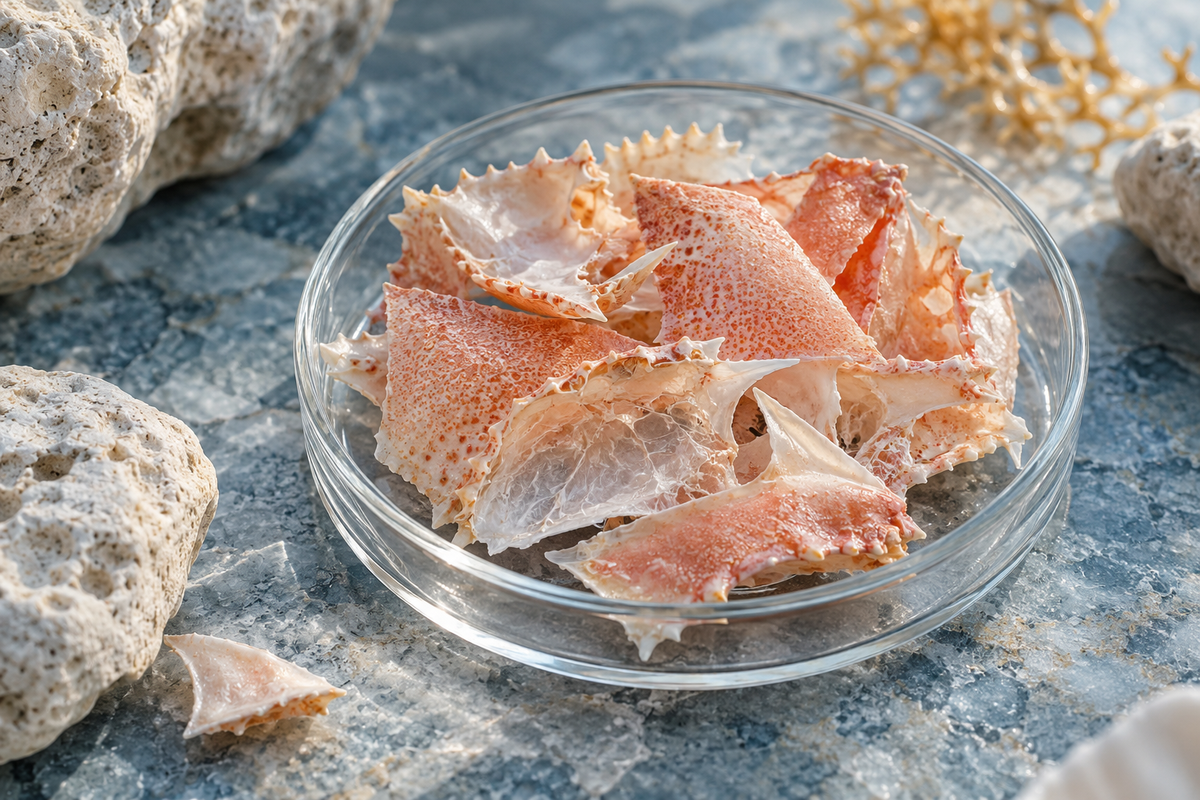
Crustacean shell contains mineral and protein as well as chitin. Record the preparation history and measure the relevant solids basis before comparing enzyme additions. An enzyme active on a reference chitin substrate may show little apparent effect on intact shell because the polymer is poorly accessible. Include a preparation-only control so any chemical or mechanical contribution is visible.

Choose oligomers or monomer as the target

Endo-chitinase cleavage generates shorter chitin fragments and new chain ends. Complete conversion to N-acetylglucosamine can require additional compatible activities. Do not assume a rise in reducing ends means that the desired monomer has been produced. Use a product-specific method or chromatography to distinguish oligomer distribution from monomer yield.

Keep assay and application claims separate

Confirm the unit definition and test conditions for the supplied product, especially before comparing activity numbers from different methods. Record pH, temperature, particle size and mixing over the hold. The listed chitinase is a non-food grade; this process-development guide does not turn that preparation into a food ingredient or establish a biological-control claim.

Troubleshooting

  • Reference works but shell does not: investigate preparation and accessible surface.
  • High soluble signal with low monomer: identify oligomers and assay background.

Common questions

Is raw shell equivalent to purified chitin?

No. Mineral, protein and structure affect enzyme access and the interpretation of yield.

Does reducing-sugar release prove monomer production?

No. Oligomers can also contribute reducing ends.

Evidence and scope

These are proposed development comparisons, not validated production recipes or guaranteed performance results. Use current grade-specific technical data for the starting dose and operating conditions. Record the enzyme lot and assay definition, and confirm performance in the finished process before scale-up.

Plant Biomass Enzyme Blends: Matching Treatment to the Residue

How to Design an Enzyme Screening Trial That Gives Useful Results

Process development and supply

Share your feedstock, batch size, temperature and pH profile, treatment time and target specification with Scientific & Technical. Select a relevant product below to see current pack sizes, price and availability, and buy online. For blends and kits, confirm the component selection and conditions against your intended application.

Follow each preparation’s technical and safety data sheets, including storage and handling instructions. Avoid generating enzyme dust or aerosols.

Recommended products

Choose the products that match your process. Each card explains its role in this application; you do not need every enzyme in one recipe.

Chitinase
Chitin hydrolysis

Chitinase

Generate shorter chitin fragments

  • Compare prepared substrate with raw material
  • Measure the intended oligomer or monomer profile

From £189.99

View sizes & buy

Benefits are application targets; confirm dosage and performance in your finished formulation.

References and supporting evidence

Research and manufacturer examples support the application rationale; they do not establish identical performance for every commercial preparation.

  1. IUBMB enzyme nomenclature — EC 3.2.1.14

    Reaction classification supporting the mechanism discussed; a family example where applicable, not confirmation of the supplied preparation’s exact activity profile or process settings.

  2. Scientific & Technical — Chitinase

    Current product information; confirm the technical sheet, intended-use documentation and lot specification for the supplied preparation.