Fructan and syrup processing

Inulinase for Inulin Processing: Fructose or Fructooligosaccharides?

Choose inulinase trials for fructose or fructooligosaccharides. Compare enzyme type, inulin accessibility and sugar profiles at a controlled endpoint.
Inulinase for Inulin Processing: Fructose or Fructooligosaccharides?

Choose the right enzyme

FeedstockProcessing targetEnzyme to investigateWhat to measure
Extracted inulinIncrease fructose releaseConfirmed exo-acting activityFructose and residual fructan
Long-chain fructanDevelop shorter fractionsConfirmed endo-acting activityOligosaccharide distribution
Plant-root materialEstablish accessibilityInulinase after controlled extractionRecovery against extraction-only control

These comparisons identify useful development endpoints; they are not universal dose or operating-condition recommendations.

Plan the process

  1. 1

    Specify the sugar target

    Specify a fructose-rich or defined oligosaccharide target and characterise the starting carbohydrate.

  2. 2

    Compare extraction

    Compare extraction-only material with two supported enzyme additions at matched solids.

  3. 3

    Measure the profile

    Measure individual sugars and the relevant fructan chain-length distribution over time.

  4. 4

    Validate finishing

    Validate stopping, concentration and storage against the selected composition.

Inulin processing should start with the desired carbohydrate profile. An enzyme that gives extensive fructose release may be unsuitable when the aim is to retain shorter fructooligosaccharides. Confirm the preparation’s activity type before designing the treatment.

Distinguish internal cleavage from terminal release

Endo-inulinase and exo-acting fructan hydrolases produce different patterns of conversion. Internal cleavage can generate shorter fructan chains, whereas terminal release can progressively increase free fructose. A commercial name or total activity number alone does not establish the balance of these activities. Request the assay definition and available product-profile data for the preparation, then measure the result on your own feedstock.

Separate extraction from enzyme performance

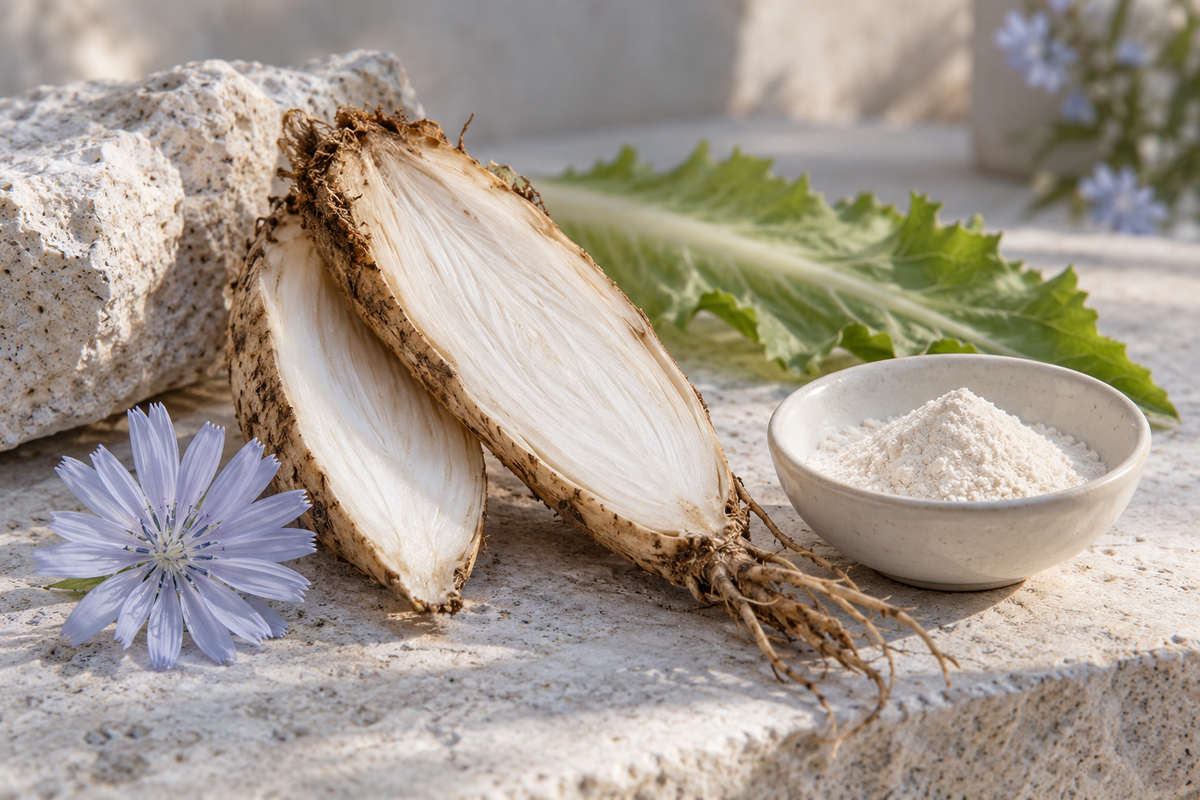
Chicory and other plant materials vary in inulin content, chain-length distribution and accessible soluble solids. Compare the enzyme treatment with an otherwise identical extraction-only control. Record dry matter, preparation, temperature history and filtration losses. If the substrate remains inaccessible, an increase in enzyme addition may have little effect. Keep any pretreatment constant while comparing enzyme levels.

Select the endpoint by carbohydrate composition

Brix measures soluble solids and does not resolve fructose, glucose, sucrose or the distribution of fructan chain lengths. Use a suitable chromatographic or validated specific method to follow the desired sugars and residual inulin. Test the stopping and finishing process so that a promising intermediate profile does not continue towards greater hydrolysis during storage. Any prebiotic or nutritional claim needs its own evidence.

Troubleshooting

  • Solids increase without the target profile: separate extraction effects from hydrolysis.
  • The desired fraction disappears during storage: investigate residual enzyme activity and finishing conditions.

Common questions

Does inulinase always make FOS?

No. The activity mix and treatment severity determine the profile, and extensive terminal hydrolysis may favour free fructose.

Can Brix show conversion?

Brix is useful for solids control but cannot establish the individual sugar or fructan profile.

Evidence and scope

These are proposed development comparisons, not validated production recipes or guaranteed performance results. Use current grade-specific technical data for the starting dose and operating conditions. Record the enzyme lot and assay definition, and confirm performance in the finished process before scale-up.

Glucose Isomerase for Fructose Syrup: Feed Quality and Conversion

How to Design an Enzyme Screening Trial That Gives Useful Results

Process development and supply

Share your feedstock, batch size, temperature and pH profile, treatment time and target specification with Scientific & Technical. Select a relevant product below to see current pack sizes, price and availability, and buy online. For blends and kits, confirm the component selection and conditions against your intended application.

Follow each preparation’s technical and safety data sheets, including storage and handling instructions. Avoid generating enzyme dust or aerosols.

Recommended products

Choose the products that match your process. Each card explains its role in this application; you do not need every enzyme in one recipe.

Inulinase
Fructan processing

Inulinase

Develop a defined carbohydrate profile

  • Confirm the preparation’s endo/exo activity pattern
  • Measure fructose and residual fructan fractions

Benefits are application targets; confirm dosage and performance in your finished formulation.

References and supporting evidence

Research and manufacturer examples support the application rationale; they do not establish identical performance for every commercial preparation.

  1. IUBMB enzyme nomenclature — EC 3.2.1.7

    Reaction classification supporting the mechanism discussed; a family example where applicable, not confirmation of the supplied preparation’s exact activity profile or process settings.

  2. IUBMB enzyme nomenclature — EC 3.2.1.80

    Reaction classification supporting the mechanism discussed; a family example where applicable, not confirmation of the supplied preparation’s exact activity profile or process settings.

  3. Scientific & Technical — Inulinase

    Current product information; confirm the technical sheet, intended-use documentation and lot specification for the supplied preparation.