Biodiesel and oil conversion

Lipase for Soapstock Biodiesel: Feedstock, Trial and FAME Analysis

Can lipase convert soapstock to biodiesel? Compare acidulated and untreated feedstock, water balance, FAME conversion and recovered product yield.
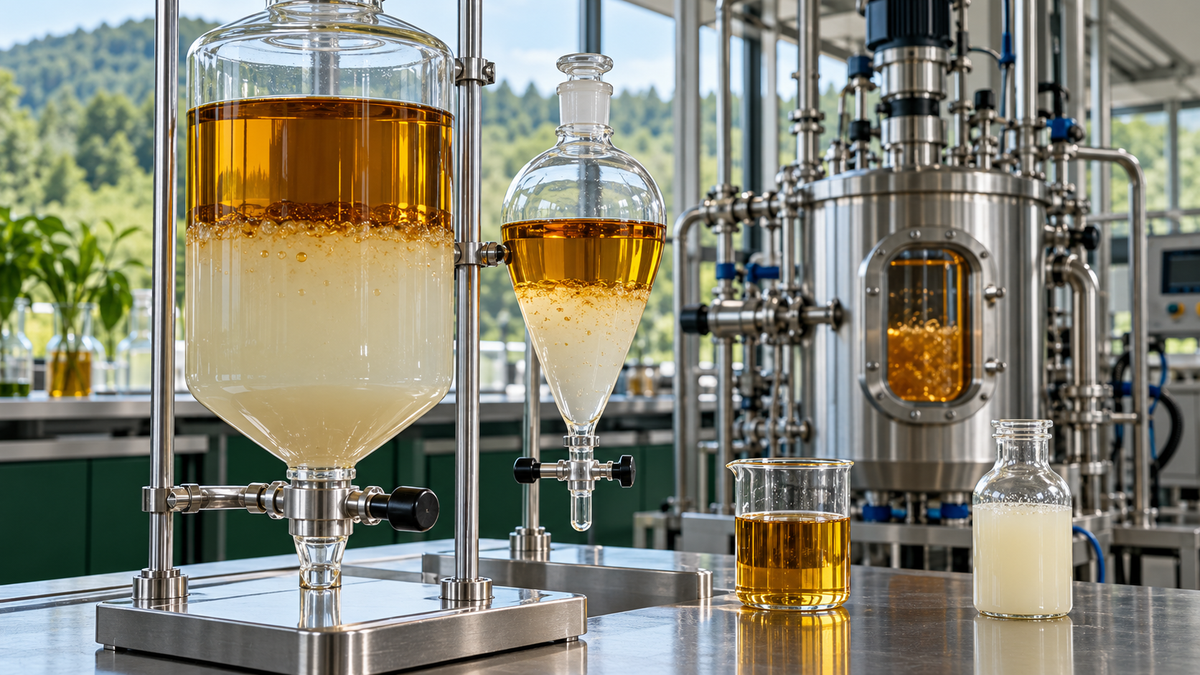
Lipase for Soapstock Biodiesel: Feedstock, Trial and FAME Analysis

Choose the right enzyme

FeedstockProcessing targetEnzyme to investigateWhat to measure
Soap-rich alkaline soapstockAssess pretreatment and accessBiodiesel Lipase after appropriate preparationSoaps, FFA, FAME and recovered mass
Acidulated oilAssess esterification contributionBiodiesel LipaseAcid value, FAME and residual glycerides
Variable mixed feedScreen blend compatibilityBiodiesel Max Yield Pro if grade is suitableRepeatability and cost per tonne

Confirm the supplied grade's suitability for the actual feedstock. These are trial directions, not universal operating conditions.

Plan the process

  1. 1

    Characterise the feed

    Record oil, water, free fatty acids, soaps, salts and retained lot samples.

  2. 2

    Set controls

    Compare no enzyme, untreated soapstock, the chosen pretreatment and a reference oil.

  3. 3

    Follow conversion

    Sample with a consistent stopping procedure and quantify FAME and residual components.

  4. 4

    Calculate recovery

    Use original soapstock mass as the denominator and include separation losses.

Soapstock can be a useful lipid feedstock, but its composition changes the enzyme trial. Start by distinguishing oil, free fatty acids and soaps, then measure both ester conversion and recoverable product.

Characterise the oil and soaps

Refinery soapstock may contain triglycerides, free fatty acids, soaps, water, phospholipids, salts and insolubles in changing proportions. An alkaline soap-rich stream and an acidulated oil are different feedstocks. Measure the starting mass and relevant composition before making claims about conversion; retain a sample from each lot.

Acidulation can shift soaps to free fatty acids and change phase behaviour, but it also adds a processing step. Compare untreated and pretreated material on the same original-feedstock basis, including all separation losses.

Treat water and alcohol as process variables

Lipase-catalysed reactions depend on the actual formulation and interface. Some water may be needed for activity while excess water can favour hydrolysis or complicate ester production and recovery. Drying a feed to the lowest possible water level is not automatically the best choice.

Alcohol identity, total dose and addition profile can affect performance. Record these alongside pH history, mixing, enzyme grade and temperature. Follow the supplier's current technical data when setting an initial screen rather than treating a published optimum for another lipase as transferable.

Measure FAME and recovered product

Compare no-enzyme, enzyme-treated soapstock and an enzyme-treated pretreated fraction. Add a simple reference oil as a positive control if feedstock inhibition is suspected. Use matched vessels and time-course samples; stop activity consistently before analysis.

Quantify fatty-acid methyl esters, residual glycerides and free fatty acids with suitable validated methods. Report the recovered mass of finished ester-rich product per kilogram of original soapstock as well as its composition. A TLC spot or visually clear layer cannot establish fuel compliance.

Why soapstock needs its own experiment

Alkaline soaps, free fatty acids and neutral oil are different substrate pools. Compare untreated soapstock with any acidulated or otherwise prepared fraction while recording material that is lost during acidulation and washing. An apparent rise in FAME percentage can come from removing a difficult fraction before the reaction.

Run a matched lipid reference alongside the soapstock and measure acid value before and after. A fall in free fatty acids does not, by itself, show that glycerides were converted; report residual glycerides and recovered ester mass too.

Choosing the endpoint

If a white precipitate or persistent emulsion develops, identify where it forms and analyse both phases before attributing it to enzyme failure. Include downstream separation effort, methanol recovery and off-spec fractions in the economics.

Troubleshooting

If the reaction stalls, check oil composition, soap content, enzyme activity, alcohol exposure and phase contact before increasing dose. If conversion appears high but product yield is low, account for material trapped in emulsions, wash streams and glycerol-rich phases. If a small-scale improvement vanishes at scale, compare mixing and residence time as well as lot variation.

Common questions

Will every biodiesel lipase convert soapstock?

No. The feedstock and supplied preparation determine the outcome; test the actual lot under documented conditions.

Does a higher FAME percentage prove a better process?

No. Include recovered FAME mass, final quality, enzyme use and downstream separation cost.

Evidence and scope

This guide proposes a development comparison, not a validated manufacturing recipe. Check the current enzyme technical and safety data and use the applicable official fuel specification and its referenced methods when evaluating a finished biodiesel product.

Recommended products

Choose the products that match your process. Each card explains its role in this application; you do not need every enzyme in one recipe.

Biodiesel Lipase
Lipid conversion

Biodiesel Lipase

Screen lipase on the actual oil

  • Control water and alcohol exposure
  • Measure ester conversion and recovered mass

Benefits are application targets; confirm dosage and performance in your finished formulation.

References and supporting evidence

Research and manufacturer examples support the application rationale; they do not establish identical performance for every commercial preparation.

  1. IUBMB — Triacylglycerol lipase, EC 3.1.1.3

    Catalytic classification for a representative activity; confirm the supplied preparation's actual activity profile.

  2. Scientific & Technical — Biodiesel Lipase

    Current product information; confirm lot-specific technical data.

  3. Scientific & Technical — Biodiesel Max Yield Pro

    Confirm the blend specification and intended use before testing.