Cleaning and detergents

Protease for Dairy CIP: Removing Protein Residues

How can a dairy plant test protease for protein soil removal without confusing cleaning chemistry, circulation and temperature effects?
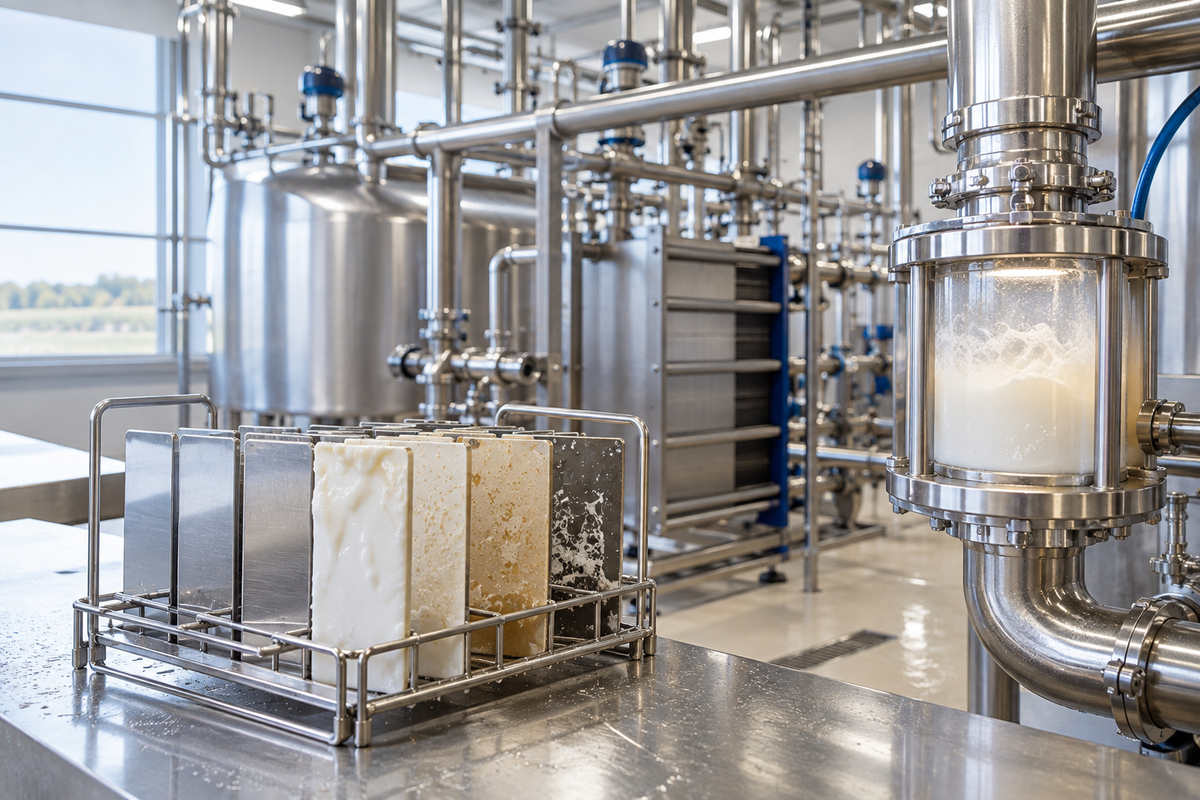
Protease for Dairy CIP: Removing Protein Residues

Choose the right enzyme

FeedstockProcessing targetEnzyme to investigateWhat to measure
Dried milk soilHydrolyse accessible proteinDetergent ProteaseResidual protein and surface cleanliness
Alkaline CIPScreen pH-compatible preparationAlkaline ProteaseProtein removal and material compatibility
Mixed fat-protein soilIdentify whether protein limits cleaningProtease with appropriate other chemistryResidual protein and fat

Confirm suitability and use conditions for the exact supplied grade; these are trial directions.

Plan the process

  1. 1

    Map the soil

    Sample actual deposits and prepare reproducible coupons.

  2. 2

    Fix the base cycle

    Keep flow, cleaner, water, temperature and time matched.

  3. 3

    Compare enzyme

    Run cleaner-only and enzyme-containing cycles.

  4. 4

    Verify hygiene

    Measure residue, rinse quality and appropriate plant validation endpoints.

Protease can help hydrolyse susceptible protein soils, but a CIP result depends on alkaline chemistry, circulation, temperature and soil age. Measure removal under the real cycle.

Identify the protein limitation

Dairy fouling can contain denatured protein, fat and minerals. Protease targets accessible peptide bonds; it does not dissolve mineral scale or replace a complete sanitation programme. Determine which fraction remains after the current cleaning cycle.

Use reproducible protein soil coupons and, where possible, a small test on actual plant deposit. Include a non-enzyme cleaner control to isolate the enzyme contribution.

Test in the real cleaning window

Measure the effective pH and temperature at the fouled surface, the exposure time and circulation. An enzyme may perform in buffer yet lose activity in a strongly alkaline, oxidising or otherwise incompatible cleaning formulation.

Trial compatible detergent or alkaline grades against the established cycle. Check foaming, materials compatibility and downstream rinsing as well as cleaning result.

Prove operational value

Measure residual protein with a validated surface or rinse method, and track fat and mineral residues separately. Compare cycle time, water use and chemical cost without weakening plant hygiene controls.

Confirm the final process through the site's established cleaning validation procedure; a laboratory coupon result alone does not verify sanitary release.

Use representative fouled surfaces

Prepare coupons or removable fittings with the actual dairy deposit and thermal history, since baked-on milk protein behaves differently from a freshly applied protein solution. Include accessible and shadowed positions if the equipment has spray or flow limitations.

Compare the current CIP programme, a reduced programme and a matched programme with protease. Keep flow, temperature, contact time and detergent chemistry recorded, and measure residual protein on the surface rather than in the return liquid alone.

Validate cleaning separately from hygiene

A reduction in protein residue does not establish microbial control. Confirm chemical compatibility and assess the complete sanitation sequence using the site’s normal hygienic acceptance tests.

Troubleshooting

If protease adds no benefit, test activity after formulation exposure and determine whether protein is the residual soil. If performance varies by location, inspect hydraulic coverage and flow. If cleaning improves but rinsing worsens, review foam and formulation compatibility.

Common questions

Can protease replace the normal CIP chemicals?

No universal substitution follows; evaluate it within the full validated cleaning programme.

Does a protein assay prove the surface is safe?

No. It is one cleaning measure alongside the site's hygiene validation.

Evidence and scope

This is a proposed development comparison, not a validated production recipe or guaranteed performance claim. Use current grade-specific technical and safety data, and verify the finished product against applicable requirements.

Recommended products

Choose the products that match your process. Each card explains its role in this application; you do not need every enzyme in one recipe.

Benefits are application targets; confirm dosage and performance in your finished formulation.

References and supporting evidence

Research and manufacturer examples support the application rationale; they do not establish identical performance for every commercial preparation.

  1. IUBMB — Peptidases, EC 3.4

    Catalytic classification for a representative activity; confirm the supplied preparation's actual activity profile.

  2. Scientific & Technical — detergent-protease-enzyme

    Confirm the current technical sheet and lot documentation.

  3. Scientific & Technical — protease-alkaline

    Confirm the current technical sheet and lot documentation.