Protein processing

Protease for Food Protein Hydrolysates: Function and Flavour

How should a food developer select and stop a protease treatment for soluble protein, peptide profile and acceptable flavour?
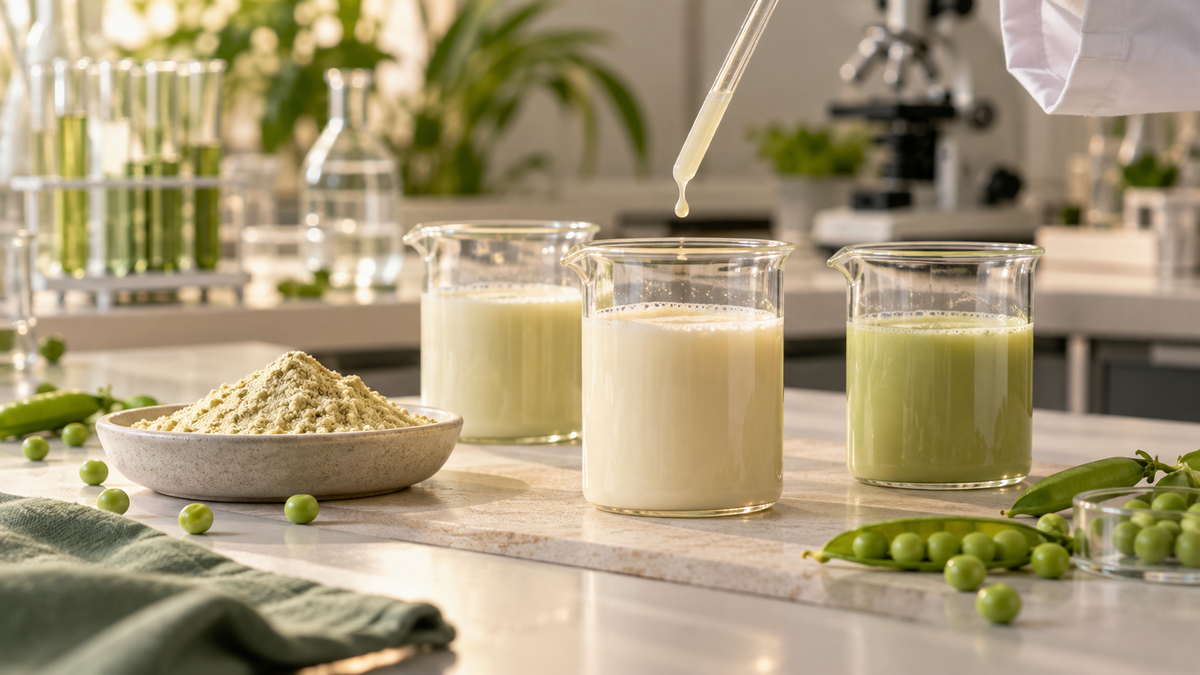
Protease for Food Protein Hydrolysates: Function and Flavour

Choose the right enzyme

FeedstockProcessing targetEnzyme to investigateWhat to measure
Acidic protein streamAvoid neutralisation before treatmentAcidic proteaseSolubility and flavour
Near-neutral dispersionLimit pH adjustmentNeutral proteasePeptide profile and function
Alkaline processInvestigate extensive hydrolysisAlkaline proteaseHydrolysis and neutralisation burden

These choices set a trial direction; confirm suitability and use conditions for the specific supplied grade.

Plan the process

  1. 1

    Define ingredient goal

    Choose solubility, emulsification or peptide target.

  2. 2

    Match conditions

    Shortlist grades by the actual pH and temperature profile.

  3. 3

    Sample a time course

    Measure hydrolysis and functional changes alongside flavour.

  4. 4

    Stop and finish

    Validate inactivation, neutralisation and finished product quality.

Select a protease within the process pH range, then optimise degree of hydrolysis against solubility, function and flavour. More hydrolysis is not always better.

Protein source controls the answer

Pea, wheat, dairy and animal proteins expose different peptide bonds and behave differently during heating. A protease that improves solubility for one substrate may create bitterness or loss of gel strength in another.

Prepare matched dispersions from a single protein lot. Include a no-enzyme control that receives the same pH adjustment, heat treatment and downstream finishing.

Compare grades on a fair basis

Use each preparation within its documented operating window, but record activity definitions and treatment cost. Numerical units from different assays cannot simply be compared as if they represent equal activity on the food protein.

Sample through time and measure soluble protein, a validated hydrolysis indicator, peptide distribution where relevant and a sensory or flavour endpoint. Stop every analytical aliquot consistently.

Finish the ingredient before deciding

Heat inactivation, pH neutralisation, salt addition and drying can change function and flavour. Compare the complete finished ingredient, not only the hydrolysis vessel.

Specify the use case and intended food status for the exact commercial grade. Choose the route with acceptable function and flavour at an economical enzyme and process cost.

Set a target hydrolysate specification

State the starting protein source, solids, desired degree of hydrolysis and intended function, such as solubility or emulsification. Compare acidic, neutral and alkaline preparations on the same protein and report dose using a defined product or activity basis. Activity numbers from unlike assays cannot rank their performance.

Sample at multiple hydrolysis times and stop the reaction consistently before tasting or testing functionality. Residual protease can continue to change the material after sampling, obscuring the intended endpoint.

Manage flavour and fractionation

Quantify the tradeoff between peptide size, functional improvement and bitterness using matched sensory and analytical samples. If a membrane or separation step removes bitter fractions, account for its yield loss when comparing routes.

Troubleshooting

If bitterness appears, shorten treatment and compare grades or a different endpoint; do not assume dilution solves the peptide profile. If hydrolysis seems low, check substrate accessibility and assay validity. If function vanishes after drying, test the full finishing process.

Common questions

Is the protease with the highest activity number best?

No. Assays differ, and the useful endpoint is performance on your protein.

Can I choose only from process pH?

pH narrows the list; flavour, peptide profile and finishing determine the final choice.

Evidence and scope

These are proposed development comparisons, not validated operating recipes or guaranteed outcomes. Confirm the current technical and safety data for the exact grade, and assess the finished product against relevant requirements.

Recommended products

Choose the products that match your process. Each card explains its role in this application; you do not need every enzyme in one recipe.

Benefits are application targets; confirm dosage and performance in your finished formulation.

References and supporting evidence

Research and manufacturer examples support the application rationale; they do not establish identical performance for every commercial preparation.

  1. IUBMB — Peptidases, EC 3.4

    Catalytic classification for a representative activity; confirm the supplied preparation's actual activity profile.

  2. Scientific & Technical — acid-protease-enzyme

    Product information; confirm current technical and lot documentation.

  3. Scientific & Technical — neutral-protease-enzyme

    Product information; confirm current technical and lot documentation.

  4. Scientific & Technical — protease-alkaline

    Product information; confirm current technical and lot documentation.