Baking and protein structure

Protease vs Transglutaminase in Dough: Relaxation or Cross-Linking?

Compare protease and transglutaminase in dough. Choose relaxation or protein cross-linking and measure extensibility, handling and gas retention.
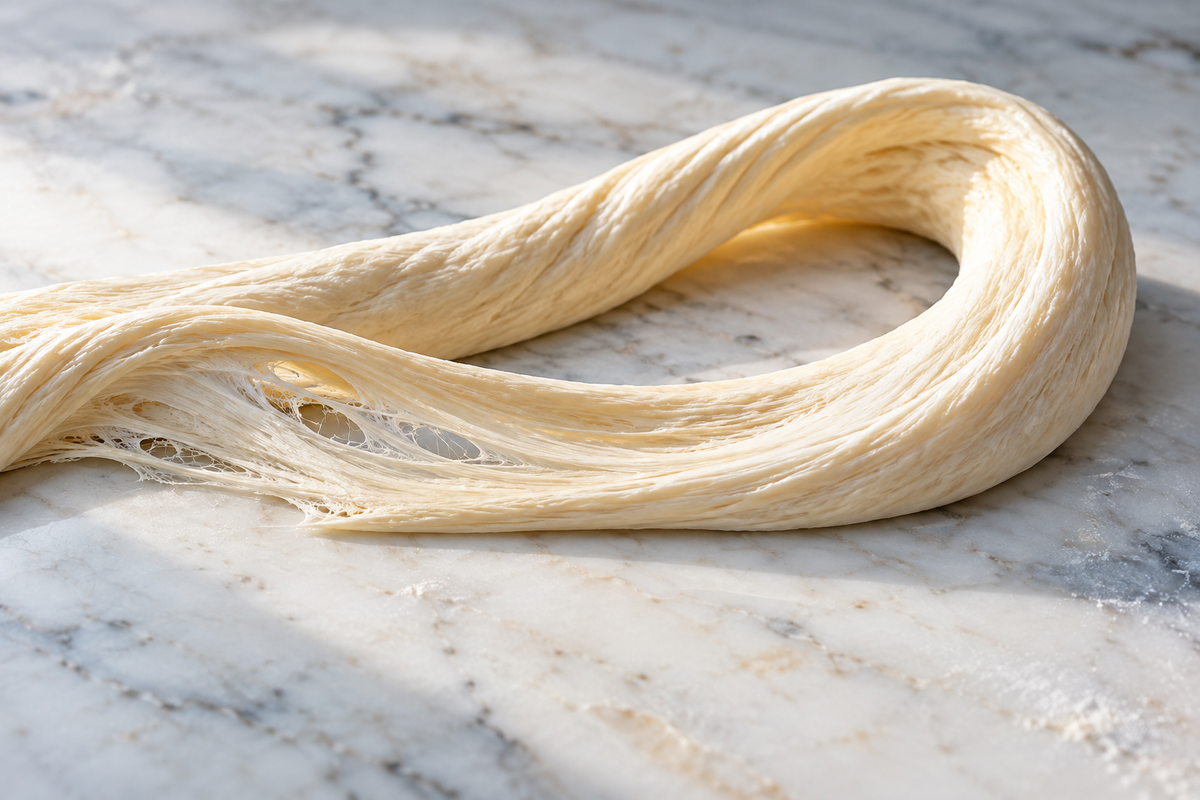
Protease vs Transglutaminase in Dough: Relaxation or Cross-Linking?

Choose the right enzyme

FeedstockProcessing targetEnzyme to investigateWhat to measure
Overly resistant doughIncrease relaxationBaker’s ProteaseExtensibility and processing
Weak protein networkAssess cross-linkingBaker’s TransglutaminaseRetention and resistance
Balanced recipePreserve handling windowLow-dose comparisonFinished quality and tolerance

These comparisons identify useful development endpoints; they are not universal dose or operating-condition recommendations.

Plan the process

  1. 1

    Define handling needs

    Define whether the dough needs greater relaxation, retention or another measurable change.

  2. 2

    Compare opposing activities

    Compare the untreated recipe with separate protease and transglutaminase trials at supported product additions.

  3. 3

    Measure the window

    Record dough behaviour after mixing and at the actual resting and proofing endpoints.

  4. 4

    Confirm baked quality

    Bake and compare structure, volume and eating quality before considering a combined treatment.

Protease and transglutaminase can move dough behaviour in different directions. Protease cleaves proteins, while transglutaminase can form links between suitable protein residues. Start with the required balance of extensibility and resistance.

Select the direction of change

A dough that resists sheeting may benefit from controlled protein breakdown, whereas a formulation lacking a suitable network may merit a cross-linking trial. Neither response is guaranteed by the enzyme name alone. Record the flour, protein system and current handling problem before selecting a candidate. Avoid treating greater apparent strength as the universal objective for bread, biscuits and laminated dough.

Make reaction time part of the dose

An enzyme addition continues to act while conditions permit. Mixing, resting and proofing therefore contribute to the treatment exposure. The current bakery listings give protease at 300–800 mg/kg flour and transglutaminase at 10–25 mg/kg flour; these are formulation-specific ranges. Use the supplied instructions and compare the full process timing rather than only the initial mixing result.

Assess the trade-off in the finished product

Measure extensibility, resistance, stickiness and gas retention alongside volume and crumb. Excessive proteolysis may weaken the structure; excessive cross-linking may reduce useful extensibility. Screen each enzyme separately before testing a combination. Protein modification does not establish removal of gluten or suitability for a gluten-free claim; the listed bakery carriers also include wheat.

Troubleshooting

  • Dough weakens during a long rest: consider cumulative protease exposure.
  • Dough becomes tight and hard to sheet: reassess cross-linking dose and reaction time.

Common questions

Can the two enzymes simply cancel each other out?

Their reactions and substrate access differ; a combination needs its own measured trial.

Does protease treatment make wheat dough gluten-free?

No. That conclusion cannot be inferred from changed dough handling or protein hydrolysis.

Evidence and scope

These are proposed development comparisons, not validated production recipes or guaranteed performance results. Use current grade-specific technical data for the starting dose and operating conditions. Record the enzyme lot and assay definition, and confirm performance in the finished process before scale-up.

Lipase in Baking: Dough Stability, Volume and Trial Design

Choosing Bread Improver Enzymes: Blend or Individual Components?

How to Design an Enzyme Screening Trial That Gives Useful Results

Process development and supply

Share your feedstock, batch size, temperature and pH profile, treatment time and target specification with Scientific & Technical. Select a relevant product below to see current pack sizes, price and availability, and buy online. For blends and kits, confirm the component selection and conditions against your intended application.

Follow each preparation’s technical and safety data sheets, including storage and handling instructions. Avoid generating enzyme dust or aerosols.

Recommended products

Choose the products that match your process. Each card explains its role in this application; you do not need every enzyme in one recipe.

Baker's Protease
Dough relaxation

Baker's Protease

Evaluate easier extension

  • Compare reduced resistance and processing effort
  • Retain sufficient structure for the finished product

Benefits are application targets; confirm dosage and performance in your finished formulation.

References and supporting evidence

Research and manufacturer examples support the application rationale; they do not establish identical performance for every commercial preparation.

  1. IUBMB enzyme nomenclature — EC 2.3.2.13

    Reaction classification supporting the mechanism discussed; a family example where applicable, not confirmation of the supplied preparation’s exact activity profile or process settings.

  2. Scientific & Technical — Baker's Protease

    Current product information; confirm the technical sheet, intended-use documentation and lot specification for the supplied preparation.

  3. Scientific & Technical — Baker's Transglutaminase

    Current product information; confirm the technical sheet, intended-use documentation and lot specification for the supplied preparation.