Cleaning and detergents

Lipase for Laundry and Industrial Degreasing: A Formulation Trial

Which lipase format removes oily soils? Design a controlled wash trial for fabric, temperature, formulation stability and cost.
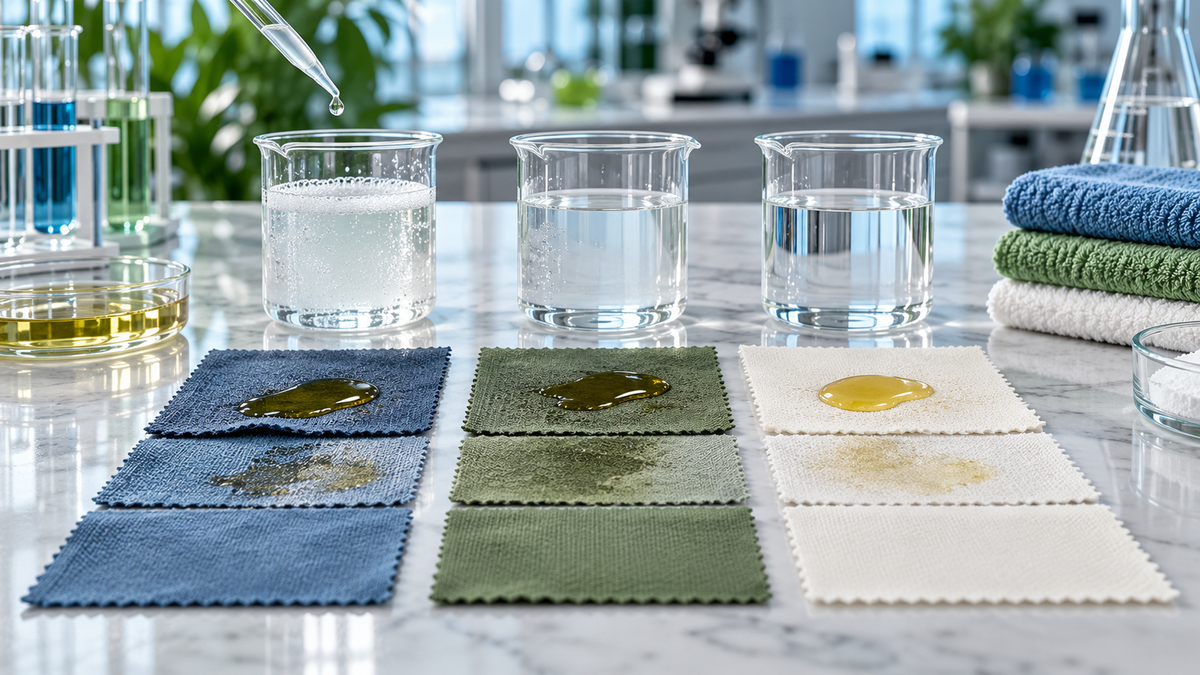
Lipase for Laundry and Industrial Degreasing: A Formulation Trial

Choose the right enzyme

FeedstockProcessing targetEnzyme to investigateWhat to measure
Liquid detergentPumpable dosing into a compatible baseLipase (eco detergent)Stain removal and retained activity
Dry detergentDry blend and dust managementLipase (cellulose powder)Dispersion, storage and cleaning
Kitchen degreaserHard surface oil removalConfirmed compatible lipase gradeSurface residue and rinseability

Select a development direction and confirm the supplied grade in an application trial; activity units from unlike assays are not directly comparable.

Plan the process

  1. 1

    Choose soils

    Use named food oils or sebum-like soils on repeatable test swatches.

  2. 2

    Fix the wash

    Keep detergent base, load, temperature, water hardness and agitation matched.

  3. 3

    Compare doses

    Run enzyme-free base and graded lipase additions with replicates.

  4. 4

    Test shelf life

    Repeat cleaning after the intended storage period.

Lipase can hydrolyse susceptible fats in oily soils, but cleaning also depends on surfactants, temperature, contact time and rinsing. Test it in the intended formulation.

Start with the soil

Triglyceride-rich stains, oxidised fats and mineral oils do not present the same substrate. Lipase acts on hydrolysable ester bonds; a lipase result on one oily stain should not be extrapolated to all grease.

Document fabric type, staining procedure and age. Include an unstained fabric to spot unwanted changes and use an objective stain or residual-oil measurement where possible.

Test in the finished formula

Surfactants can help wet the soil, but detergent pH, builders, preservatives and oxidants can affect enzyme stability. Determine activity after mixing and after storage, not only in a fresh laboratory buffer.

Compare the same finished base with and without lipase at practical wash temperatures and times. A detergent blend containing several enzymes requires an additional control if you want to attribute the effect specifically to lipase.

Select the physical form

Liquid and powder describe dosing and handling, not a different catalytic mechanism. Check carrier, dispersion and dust controls for the supplied powder and verify that the liquid formulation fits the production line.

Choose on cleaned-soil result per wash and retained activity, with cost and handling included. Avoid claiming low-temperature performance without testing the chosen soil at the stated temperature.

Build a relevant stain panel

Choose at least two soils representative of the customer problem, such as cooking grease on cotton and a process oil on a hard surface. Age them consistently, record deposited mass and use the intended wash temperature and contact time. A result on a convenient laboratory oil may not predict performance on oxidised or mineral-oil-rich residues.

Compare base formula, formula plus lipase, and the current commercial benchmark. Hold surfactant concentration, pH, water hardness and mechanical action constant; enzyme compatibility is a property of the complete formulation.

Balance efficacy with stability

Evaluate removal after immediate formulation and after realistic storage, not solely on the day of blending. If the lipase loses activity, inspect oxidants, chelants and preservatives, and confirm the selected liquid or powder form can be dosed safely.

Troubleshooting

If no gain appears, verify enzyme activity in the detergent matrix and test a susceptible triglyceride soil. If fresh performance is good but aged performance drops, investigate formulation stability and storage. If swatches differ widely, standardise soil loading and wash agitation.

Common questions

Will lipase remove every grease stain?

No. Soil chemistry and wash conditions determine the result.

Should I add the highest enzyme dose?

Screen a dose response and stop where incremental cleaning no longer justifies cost.

Evidence and scope

This is a proposed development comparison, not a validated production recipe. Verify the current specification, activity definition and safety documentation for the actual supplied preparation, and confirm the finished product against its relevant requirements.

Recommended products

Choose the products that match your process. Each card explains its role in this application; you do not need every enzyme in one recipe.

Benefits are application targets; confirm dosage and performance in your finished formulation.

References and supporting evidence

Research and manufacturer examples support the application rationale; they do not establish identical performance for every commercial preparation.

  1. IUBMB — Triacylglycerol lipase, EC 3.1.1.3

    Catalytic classification for a representative activity; confirm the supplied preparation's actual activity profile.

  2. Scientific & Technical — detergent-lipase-enzyme

    Confirm current technical data and lot documentation before use.

  3. Scientific & Technical — lipase-enzyme-cellulose-powder

    Confirm current technical data and lot documentation before use.