


Couldn't load pickup availability
Applications: include: Biofuels, Recycling, Biogas.
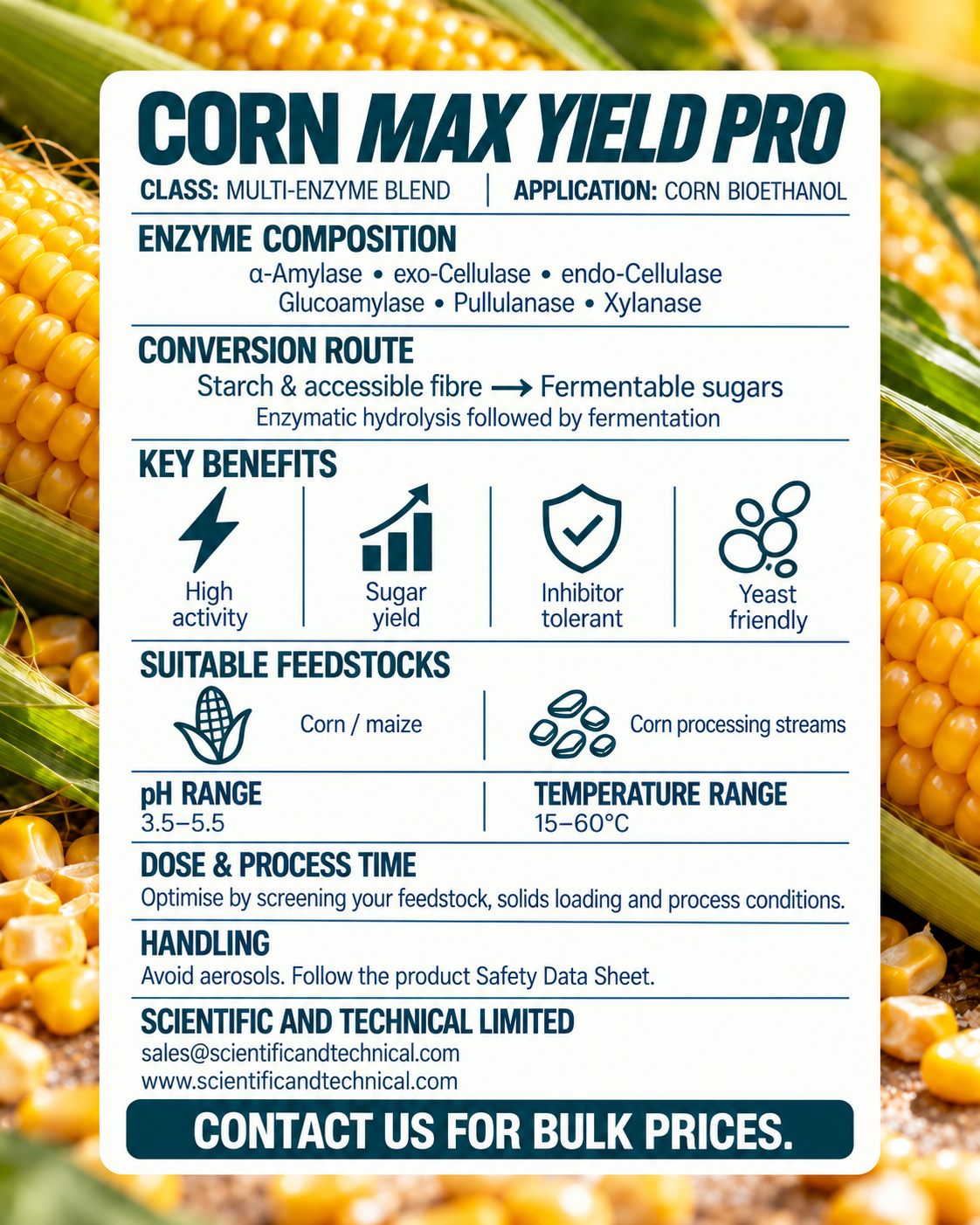
Key properties: Specially blended formulation to transform your corn (maize) biofuel yields whilst preventing inhibitor issues.
Overview: Tailored enzyme blend for corn (maize) conversion specifically formulated to efficiently break down the starch-rich biomass into fermentable sugars for bioethanol production. This blend, developed by high-throughput screening, combines α-amylase, glucoamylase, and pullulanase enzymes, each playing a complementary role in hydrolysing complex starch polymers into glucose. α-Amylase initiates the liquefaction stage by cleaving internal α-1,4 glycosidic bonds, reducing viscosity and producing dextrins. Pullulanase enhances saccharification by debranching α-1,6 linkages in amylopectin, while glucoamylase completes the process by converting dextrins and oligosaccharides into fermentable glucose. The key benefits include maximized sugar yield, reduced processing time, lower enzyme dosage requirements, and improved ethanol productivity. Additionally, optimised enzyme blends operate effectively across a broad pH and temperature range, supporting continuous, energy-efficient bioethanol production and improving the overall economic and environmental sustainability of the process.
- Certification: Biofuel Grade
- Enzymes: α-Amylase, exo-Cellulase, endo-Cellulase, Glucoamylase, Pullulanase and Xylanase
- Temperature Range: 15–60°C
- pH Range: 3.5–5.5
- Inhibitor Compatibility: High tolerance


Supporting technical guides

Bioethanol and starch processing
Enzymes for Starch Bioethanol: Corn, Grain and Potato Conversion
Compare corn, grain and potato enzyme blends for bioethanol. Assess starch preparation, glucose release and fermentation on a dry-feedstock basis.
Read technical guide
Enzyme science · Deep dive
Enzyme blends: structure, mechanism and industrial uses
Formulated blends combine selected activities to address multiple bonds or sequential reaction steps in food, cleaning and biomass processes.
Read technical guide
Enzyme science · Deep dive
Alpha-amylase: structure, mechanism and industrial uses
Rapid internal chain cleavage makes starch slurries easier to pump and prepares them for brewing, glucose production, cereal drinks and removal of starch-based stains.
Read technical guide
Enzyme science · Deep dive
Exo-cellulase: structure, mechanism and industrial uses
Cellobiose release complements endoglucanase in biomass saccharification; beta-glucosidase then converts the cellobiose into glucose.
Read technical guide
Enzyme science · Deep dive
Endo-cellulase: structure, mechanism and industrial uses
A limited number of internal cuts can reduce viscosity, loosen fibres or remove surface fibrils before extensive sugar production occurs.
Read technical guide
Enzyme science · Deep dive
Glucoamylase: structure, mechanism and industrial uses
Conversion of liquefied starch into glucose supports fermentation feedstocks, glucose syrups and alcohol production.
Read technical guide
Enzyme science · Deep dive
Pullulanase: structure, mechanism and industrial uses
Debranching supports high-glucose or high-maltose syrups and enables more complete use of branched starch dextrins.
Read technical guide
Enzyme science · Deep dive
Xylanase: structure, mechanism and industrial uses
Cleaving the xylan backbone supports cereal processing, dough modification, pulp treatment and access to fermentable biomass carbohydrates.
Read technical guide