


Couldn't load pickup availability
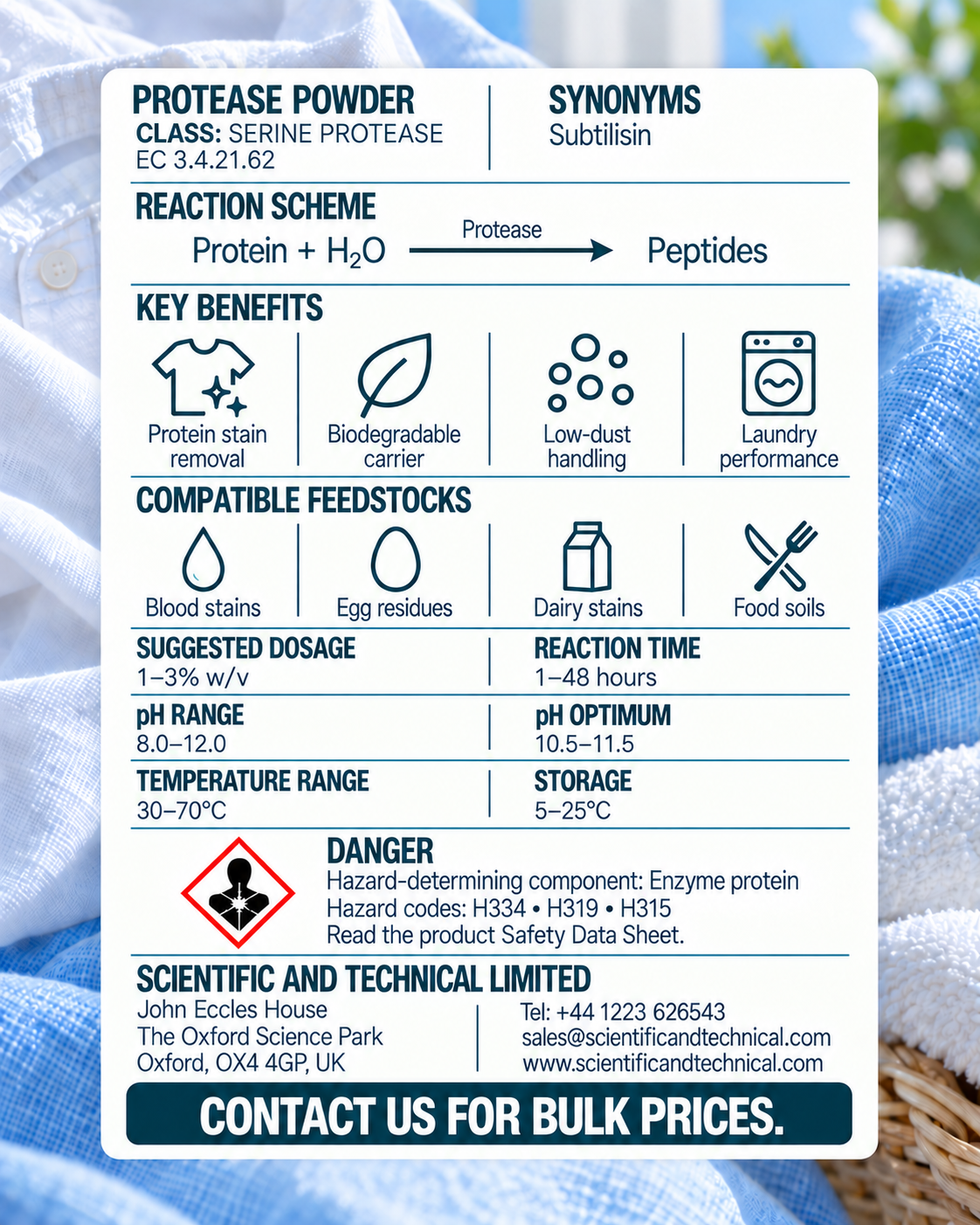
Protease (cellulose powder): Detergent grade high activity protease powder for digesting proteins.
Properties: Our protease on biodegradable cellulose powder offers a highly effective and environmentally responsible solution for a wide range of cleaning applications. The enzyme specifically targets and hydrolyses protein-based stains such as blood, egg, dairy residues, grass, and other organic soils, breaking them down into smaller, water-soluble fragments for easier removal. This focused enzymatic action enhances cleaning efficiency, particularly in formulations designed to tackle protein-rich stains, while reducing the reliance on harsh chemicals. The product is especially valuable in industrial and household detergents, laundry formulations, and surface cleaners, where it supports effective stain removal at lower temperatures, contributes to energy savings, and enables the development of eco-friendly cleaning solutions. The biodegradable cellulose powder carrier ensures excellent stability, controlled release, low dust formation, and consistent enzymatic performance. Its stable powder form supports long shelf life and reliable activity, making it a dependable choice for both professional cleaning applications and consumer products.
- Powder: Biodegradable Cellulose Microparticle
- Applications include: Cleaning / Laundry
- Product size: 100 g, 1 kg, 10 kg (larger orders available upon request)
- Certification: Detergent grade. Derived from fungal organism
- Temperature range: 15–55 degrees
- pH range: 7.0–8.5
- Typical product dosage: 1–2% w/w
- Shelf life: 12 months


Supporting technical guides

Detergent formulation
Liquid, Powder or Granulate Enzymes for Detergents?
Compare liquid, cellulose powder and TiO2 granulate detergent enzymes. Match activity to stain type and test release, storage and wash performance.
Read technical guide
Enzyme science · Deep dive
Protease: structure, mechanism and industrial uses
Protease: enzyme classifications, molecular properties, mechanisms, natural sources, production, scientific history and industrial applications.
Read technical guide