
Bioethanol and sugar crops
Sugarcane and Sugar Beet Enzymes: Juice, Molasses and Fibre
Choose enzyme trials for sugarcane and sugar beet by separating sucrose-rich streams from fibrous residues. Measure sugar recovery and fermentation.
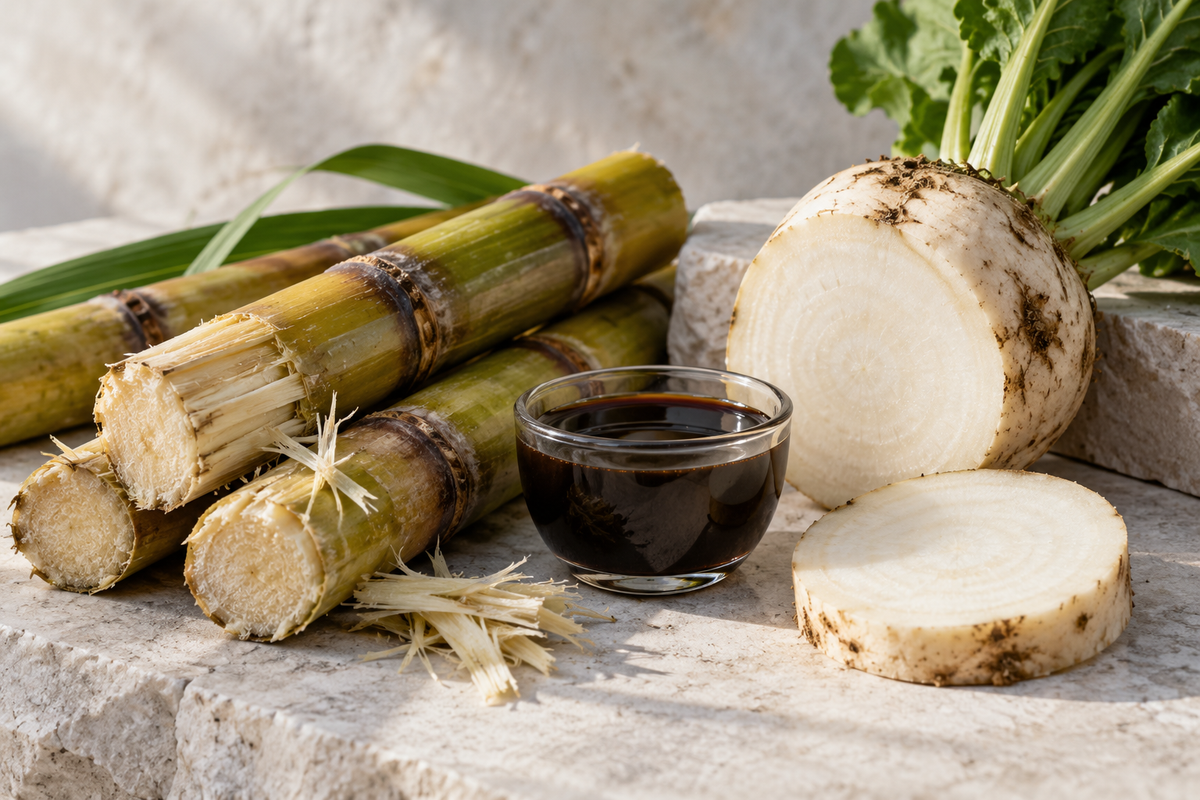
Choose the right enzyme
| Feedstock | Processing target | Enzyme to investigate | What to measure |
|---|---|---|---|
| Juice or molasses | Assess sucrose conversion | Confirmed invertase-containing route | Sucrose, glucose and fructose |
| Sugarcane bagasse | Recover accessible carbohydrate | Sugar Cane Max Yield Pro | Dry-basis sugar recovery |
| Sugar beet residue | Match cell-wall activities | Sugar Beet Max Yield Pro | Residual fibre and fermentation |
These comparisons identify useful development endpoints; they are not universal dose or operating-condition recommendations.
Plan the process
- 1
Separate feed fractions
Identify the exact stream: juice, molasses, bagasse or beet pulp, and measure its initial sugar composition.
- 2
Characterise sugars
Select the corresponding blend after confirming its current activities and supported process conditions.
- 3
Compare treatment
Compare no enzyme and selected additions while keeping dilution, preparation and solids equal.
- 4
Measure recovery
Measure sugar recovery, residual solids and fermentation output; calculate the incremental value of treatment.
Recommended products
Choose the products that match your process. Each card explains its role in this application; you do not need every enzyme in one recipe.

Sugar Cane Max Yield Pro
Investigate accessible carbohydrate
- Separate juice sugars from bagasse treatment
- Test recovery and downstream fermentation
From £108.99
View sizes & buy
Sugar Beet Max Yield Pro
Match treatment to beet material
- Distinguish soluble sugar from cell-wall conversion
- Compare yield against the same prepared control
From £108.99
View sizes & buyBenefits are application targets; confirm dosage and performance in your finished formulation.
References and supporting evidence
Research and manufacturer examples support the application rationale; they do not establish identical performance for every commercial preparation.
- IUBMB enzyme nomenclature — EC 3.2.1.26
Reaction classification supporting the mechanism discussed; a family example where applicable, not confirmation of the supplied preparation’s exact activity profile or process settings.
- Scientific & Technical — Sugar Cane Max Yield Pro
Current product information; confirm the technical sheet, intended-use documentation and lot specification for the supplied preparation.
- Scientific & Technical — Sugar Beet Max Yield Pro
Current product information; confirm the technical sheet, intended-use documentation and lot specification for the supplied preparation.